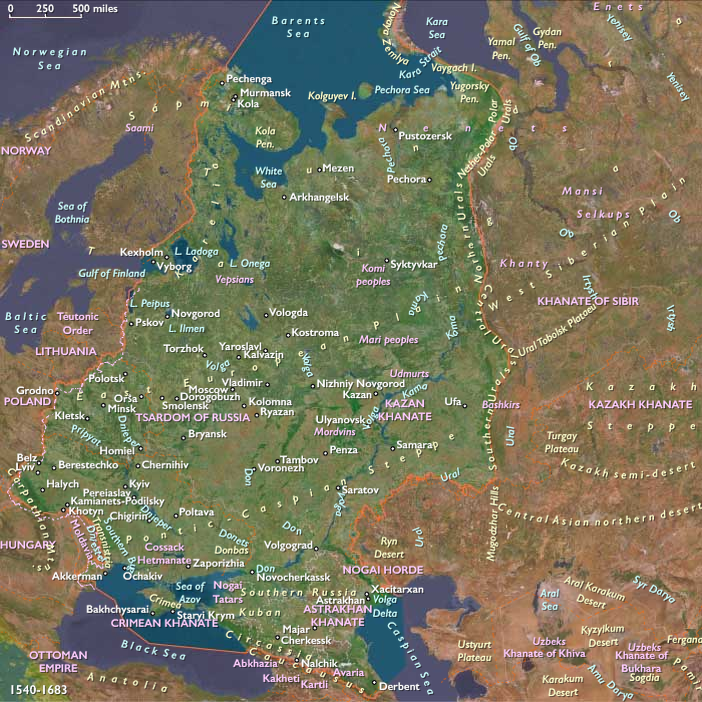
The Cossack Hetmanate is considered as a…
1648 CE to 1659 CE
In the mid-seventeeth century, a Cossack military quasi-state, the Zaporozhian Host, is formed by Dnieper Cossacks and by Ruthenian peasants who have fled Polish serfdom.
Poland exercises little real control over this population, but finds the Cossacks to be a useful opposing force to the Turks and Tatars, and at times the two are allies in military campaigns.
However the continued harsh enserfment of peasantry by Polish nobility and especially the suppression of the Orthodox Church alienates the Cossacks.
The Cossacks seek representation in the Polish Sejm, recognition of Orthodox traditions, and the gradual expansion of the Cossack Registry.
These are rejected by the Polish nobility, who dominate the Sejm.
In 1648, Bohdan Khmelnytsky and Petro Doroshenko lead the largest of the Cossack uprisings against the Commonwealth and the Polish king John II Casimir.
After Khmelnytsky makes an entry into Kiev in 1648, where he is hailed liberator of the people from Polish captivity, he founds the Cossack Hetmanate, which will exist until 1764 (some sources claim until 1782).
Khmelnytsky, deserted by his Tatar allies, suffers a crushing defeat at Berestechko in 1651, and turnsto the Russian tsar for help.
In 1654, Khmelnytsky signs the Treaty of Pereyaslav, forming a military and political alliance with Russia that acknowledges loyalty to the Russian tsar.
Groups
Lithuanians (Eastern Balts)
View →
Poles (West Slavs)
View →
Christians, Eastern Catholic (Uniate)
View →
Christians, Eastern Orthodox
View →
Christians, Roman Catholic
View →
Russians (East Slavs)
View →
Ukrainians (East Slavs)
View →
Crimean Tatars
View →
Poland of the Jagiellonians, Kingdom of
View →
Lithuania, Grand Duchy of
View →
Cossacks
View →
Podolian Voivodeship
View →
Crimean Khanate
View →
Turkish people
View →
Ottoman Empire
View →
Cossacks, Zaporozhian
View →
Russia, Tsardom of
View →
Polish-Lithuanian Commonwealth (Commonwealth of the Two Nations)
View →
Cossack Hetmanate of the Zaporozhian Host
View →
Commodities
Subjects
Regions
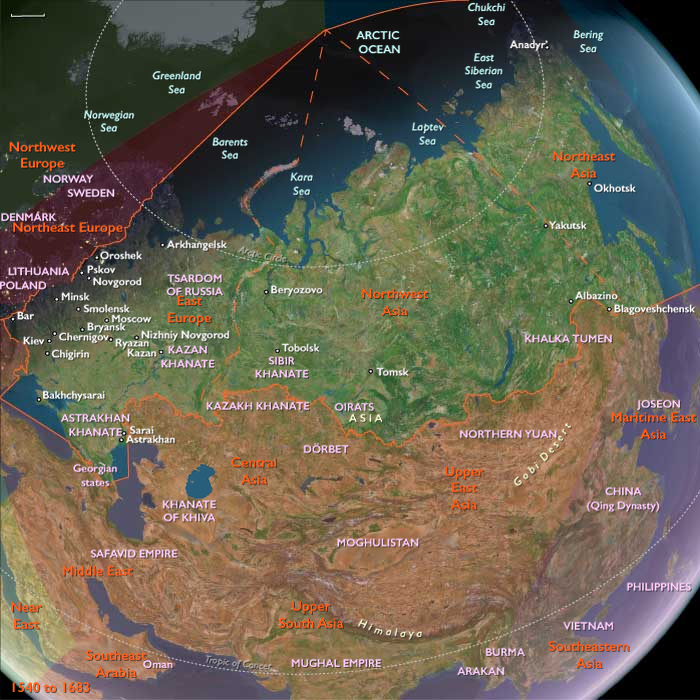
Northeastern Eurasia
View →Subregions