Northwest Asia (1828–1971 CE): Tsarist Siberia, Soviet…
1828 CE to 1971 CE
Northwest Asia (1828–1971 CE): Tsarist Siberia, Soviet Industrial Heartlands, and the Cold War Frontier
Geography & Environmental Context
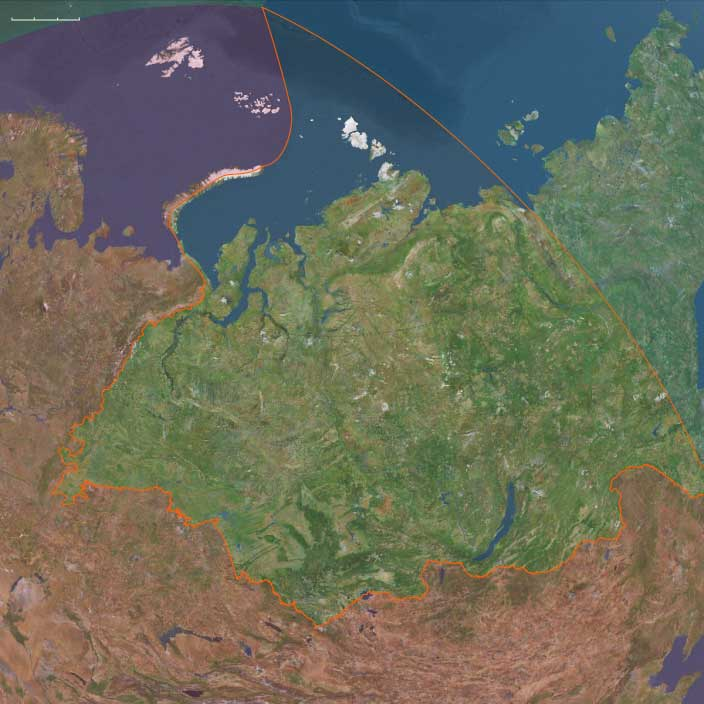
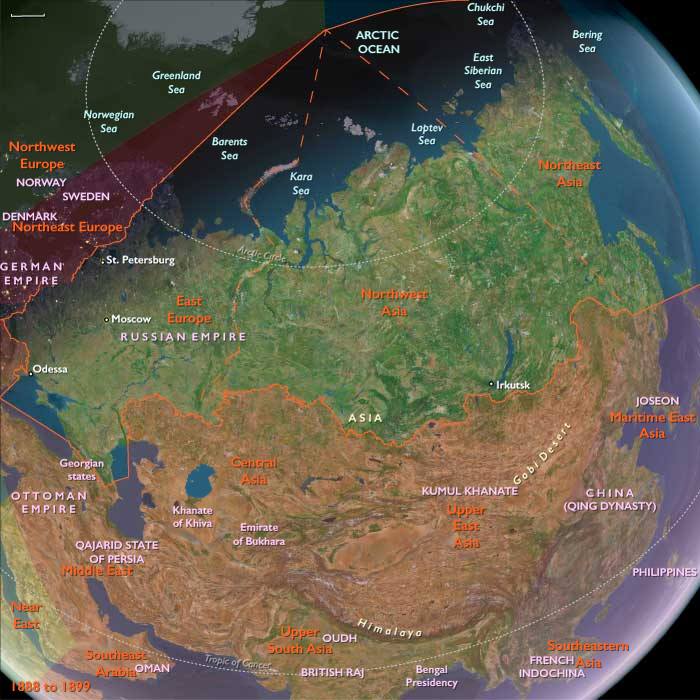
Northwest Asia stretches from the Ural Mountains eastward to roughly 130°E, covering western and central Siberia. Anchors include the West Siberian Plain, the Ob, Irtysh, Yenisei, and Lena rivers (upper and middle reaches), the Altai Mountains, the Central Siberian Plateau, and tundra–taiga belts reaching to the Kara and Laptev Seas. Cities such as Omsk, Novosibirsk, Tomsk, Krasnoyarsk, Tobolsk, and Irkutsk grew along river and rail corridors, tying the vast interior to European Russia and the Pacific.
Climate & Environmental Shifts
A sharply continental climate defined the region: long, frigid winters and short, hot summers. The 19th century brought repeated crop failures and famines in steppe margins. Seasonal flooding of the Ob and Yenisei disrupted transport but enriched floodplain soils. In the Soviet era, industrial expansion scarred landscapes—open-pit mines, hydroelectric dams, and deforestation transformed ecologies. The Virgin Lands Campaign (1950s–60s) expanded cultivation into steppe margins of Kazakhstan and southern Siberia, initially boosting output but leading to erosion and dust storms by the 1960s.
Subsistence & Settlement
-
Indigenous lifeways: Evenki, Nenets, Khanty, and other groups continued reindeer herding, hunting, fishing, and trapping, though often disrupted by Russian expansion and Soviet collectivization.
-
Russian settlers: Peasant colonization deepened in the 19th century, with rye, oats, wheat, and potatoes planted in the southern taiga and steppe.
-
Urban growth: Towns like Novosibirsk (founded 1893 as a Trans-Siberian rail hub) and Krasnoyarsk expanded into industrial centers. Tomsk and Irkutsk became cultural and administrative hubs.
-
20th-century collectivization: Peasant farms reorganized into kolkhozes and sovkhozes; livestock and grain production scaled up.
Technology & Material Culture
-
Transport: The Trans-Siberian Railway (1891–1916) revolutionized settlement, linking Siberia to Moscow and Vladivostok. Branch lines tied Omsk, Novosibirsk, and Irkutsk to mining basins. In Soviet times, highways, airfields, and river fleets augmented movement.
-
Industry: Coal from the Kuznetsk Basin, gold in the Lena fields, iron in the Urals, and oil in western Siberia transformed the economy. After 1945, the Novosibirsk Academgorodok became a symbol of Soviet science cities.
-
Everyday life: Wooden izbas remained common in villages, while Soviet apartment blocks (khrushchyovki) reshaped urban living. Radios, bicycles, and sewing machines proliferated by mid-century; televisions and automobiles appeared in the 1960s.
Movement & Interaction Corridors
-
River routes: The Ob and Yenisei remained seasonal highways, vital before full rail expansion.
-
Rail networks: The Trans-Siberian became the backbone of migration and grain exports; later, the Turkestan–Siberian and Baikal–Amur lines extended reach.
-
Exile and forced labor: Tsarist Russia sent dissidents and convicts east; the Soviet Gulag system (Kolyma, Norilsk, Krasnoyarsk camps) made Siberia synonymous with forced labor and resource extraction.
-
Migration flows: Voluntary settlers (peasants, workers, engineers) moved eastward; after WWII, displaced persons and war prisoners were relocated here.
Cultural & Symbolic Expressions
-
Orthodoxy: Russian settlers built churches, integrating Siberia into the religious sphere of the empire. Soviet atheism later suppressed open practice.
-
Indigenous traditions: Shamanic rites, oral epics, and seasonal festivals endured underground, even as collectivization curtailed mobility.
-
Literature & identity: Siberia became both exile and frontier—memorialized in works by Dostoevsky (earlier) and later Soviet novels about pioneers and labor heroes.
-
Science & education: Tomsk University (founded 1878) and Novosibirsk Academgorodok (1957) embodied Siberia’s symbolic role as a scientific frontier.
Environmental Adaptation & Resilience
-
Indigenous strategies: Nomadic herding, fishing, and hunting persisted where possible, though squeezed by settlement and industrialization.
-
Peasant resilience: Mixed farming with rye, potatoes, and livestock buffered harsh winters.
-
Soviet megaprojects: Hydroelectric dams (e.g., Krasnoyarsk, Bratsk), collective farms, and resource extraction provided food and power but disrupted ecologies and displaced communities.
-
Cold adaptation: Fur clothing, log housing, and later centralized heating and insulated Soviet blocks enabled settlement across the taiga and tundra.
Political & Military Shocks
-
1828–1917 (Tsarist era): Siberia served as penal colony and frontier for Russian expansion; the Trans-Siberian tightened control.
-
1917–22 (Revolution & Civil War): Siberia was contested by White and Red armies; Allied troops landed in Vladivostok, and Czech Legion forces crossed the Trans-Siberian.
-
Stalinist period: Collectivization, Gulag expansion, and deportations (e.g., Volga Germans, Chechens, Crimean Tatars) remade demographics. Industrialization in Kuzbass and Norilsk turned Siberia into a resource base.
-
World War II: Factories evacuated from European Russia relocated to the Urals and West Siberia, fueling the Soviet war machine.
-
Cold War (1945–1971): Siberia became a strategic depth zone—hosting nuclear test sites, missile silos, and secret science cities. Novosibirsk and Tomsk symbolized Soviet progress; Norilsk and Magadan symbolized coercion.
Transition
From 1828 to 1971, Northwest Asia (Siberia west of 130°E) shifted from an imperial hinterland of exiles and fur traders into a core Soviet industrial frontier. Railroads, mining, and hydro dams bound the taiga and steppe into national networks. Indigenous lifeways eroded under settlement and collectivization, while forced labor and resource megaprojects scarred landscapes. Yet new science cities and industries projected modernity. By 1971, Northwest Asia embodied the Soviet paradox: a land of hardship, coercion, and ecological strain—yet also the keystone of industrial might and Cold War power.
People
Groups
Commodities
Subjects
Regions
Northeastern Eurasia
View →Subregions