Northwestern North America (1684–1827 CE): Salmon Worlds,…
1684 CE to 1827 CE
Northwestern North America (1684–1827 CE): Salmon Worlds, Cedar Civilizations, and Empires on the Horizon
Geography & Environmental Context
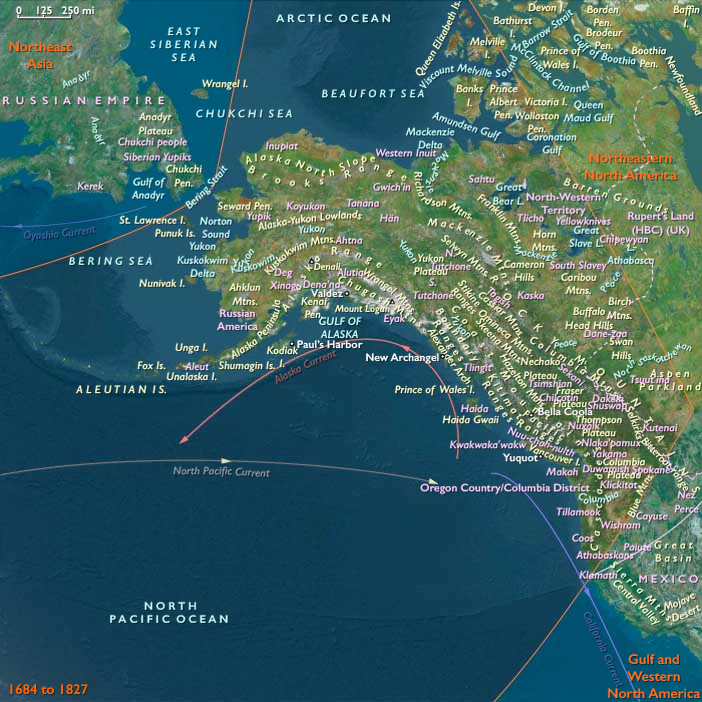
Northwestern North America includes all territory west of 110°W, except the lands belonging to Gulf and Western North America. This encompasses Alaska, the Yukon, British Columbia, Alberta west of 110°W, the Pacific Northwest of the United States including Washington, northern Idaho, the northwestern portions of Montana, Oregon north of the Gulf line, and northern California north of the Gulf line.
Anchors include the Alaska Peninsula and Aleutian chain, the Gulf of Alaska, Puget Sound, the Fraser and Columbia River systems, the coastal cordilleras, and the Inside Passage. The region combined storm-lashed fjords and temperate rainforests on the Pacific coast with salmon-bearing rivers, interior plateaus, and Arctic tundra sweeping toward the Bering Strait.
Climate & Environmental Shifts
The Little Ice Age remained in force. Glaciers advanced in Alaska and the St. Elias Mountains, while heavy snowpacks lingered in the interior plateaus. Coastal storms battered bays, and ocean cycles created variability in salmon runs, though fisheries remained robust. Interior valleys endured shorter growing seasons, with drought occasionally stressing root crops such as camas and wapato. Abundant wildlife and preserved foods buffered communities against these fluctuations.
Subsistence & Settlement
-
Coastal nations (Tlingit, Haida, Tsimshian, Kwakwaka’wakw, Coast Salish, Nuu-chah-nulth) lived in permanent plankhouse villages, supported by salmon, halibut, herring, shellfish, sea mammals, and berries. Potlatch ceremonies reinforced rank, redistribution, and community identity.
-
Aleut (Unangan) on the Aleutians specialized in sea otters, seals, and fish, inhabiting semi-subterranean barabaras that withstood gales.
-
Interior groups (Carrier, Sekani, Nez Perce, Shoshone) followed seasonal rounds, hunting caribou, elk, and bison, while fishing and root gathering.
-
Columbia River peoples organized large fisheries with weirs and platforms, hosting great trade fairs at Celilo Falls that drew thousands each year.
Technology & Material Culture
-
Cedar culture: monumental plankhouses, dugout canoes, totem poles, bentwood boxes, and masks demonstrated both engineering and artistry.
-
Tools: stone, bone, and antler remained common; copper and occasional iron entered via long-distance exchange (notably from Asia through the Aleutians).
-
Sea-mammal hunting gear: Aleutian baidarkas (kayaks), umiaks, and sophisticated harpoons allowed mastery of dangerous waters.
-
Artistry: masks, regalia, and poles embodied cosmology, lineage, and animal spirits, integrating material culture with social order.
Movement & Interaction Corridors
-
The Inside Passage supported canoe travel and trade in oil, fish, copper, and shell ornaments.
-
The Columbia River corridor linked plateau and coast, with annual trade fairs redistributing salmon, obsidian, and goods from the plains.
-
The Aleutians and Bering Strait connected Alaska to Siberia through seasonal exchanges of iron, beads, and furs between Unangan, Siberian Yupik, and Chukchi communities.
-
Overland portages across mountain passes carried obsidian, hides, and dried fish to interior groups.
Cultural & Symbolic Expressions
-
Myths: Raven, Thunderbird, and other animal beings remained central to coastal cosmologies.
-
Potlatch ceremonies dramatized hierarchy, redistribution, and cosmic cycles.
-
Aleut rituals honored sea mammals as spiritual beings, blending with shamanic practice.
-
Interior traditions venerated mountains, rivers, and animal masters, with shamans mediating between human and spirit worlds.
Environmental Adaptation & Resilience
-
Preservation: dried salmon, berries, and rendered oils provided security during lean seasons.
-
Mobility: seasonal migrations optimized access to salmon runs, hunting grounds, and root fields.
-
Alliances: exchange partnerships ensured surpluses moved across ecological zones.
-
Architecture: plankhouses, insulated barabaras, and semi-subterranean lodges resisted storms and cold.
Political & Military Shocks
Through much of this age, Indigenous nations dominated the subregion. But imperial rivals arrived on the horizon:
-
Russian fur traders reached the Aleutians by the mid-18th century, founding posts at Unalaska and Kodiak, and exploiting sea otters intensively.
-
Spanish voyages charted the Pacific Northwest in the late 18th century, establishing short-lived footholds such as Nootka Sound.
-
British and American expeditions followed (Cook, Vancouver, Gray), mapping coasts and seeking trade.
-
By the early 19th century, Russian America consolidated in Alaska, while the Hudson’s Bay Company expanded down the Columbia River. Indigenous nations remained powerful, but new dependencies, fur-trade diseases, and colonial rivalries foreshadowed upheaval.
Transition
Between 1684 and 1827, Northwestern North America remained overwhelmingly Indigenous, sustained by salmon runs, cedar technology, and ceremonial life. Yet external pressures mounted. Russian exploitation of sea otters, Spanish and British coastal expeditions, and the first Hudson’s Bay posts signaled that this subregion would soon be contested ground of empires. By 1827, Northwestern North America still pulsed with Indigenous strength, but its peoples stood at the threshold of profound transformations brought by fur trade expansion, foreign settlement, and imperial rivalry.
People
Groups
Topics
Commodities
Subjects
Regions
Northern North America
View →Subregions