
The Battle of Toro (March 1, 1476)…
1476 CE
The Battle of Toro (March 1, 1476)
- Ferdinand of Aragon pursued the retreating Portuguese army, catching up with them one league (5 km) from Toro.
- A three-hour battle ensued, interrupted by rain and nightfall.
- The battle was divided into two key engagements:
- Afonso V’s forces collapsed – The Portuguese king’s troops were routed, and he withdrew to Castronuño.
- Prince John’s division remained disciplined – Unlike his father, Prince John led an orderly retreatback to Toro, even taking some Castilian prisoners.
Conflicting Victory Claims and Political Aftermath
- Both sides claimed victory in their propaganda:
- Portuguese accounts emphasized John’s disciplined retreat, portraying it as a successful defense.
- Isabella’s supporters, however, focused on Afonso’s withdrawal, using it to declare political victory.
- The political impact was decisive:
- After the battle, most of the remaining Portuguese troops retreated back to Portugal.
- Joanna la Beltraneja, realizing her cause was collapsing, also withdrew from Castile.
- Castilian nobles who had been hesitant now overwhelmingly pledged loyalty to Isabella, further solidifying her claim to the throne.
The War’s Final Stages and the Treaty of Alcáçovas (1479)
- The Portuguese continued to fight, especially in the Atlantic trade wars, but their position in Castile never recovered.
- In 1479, the conflict ended with the Treaty of Alcáçovas, which:
- Recognized Isabella and Ferdinand as sovereigns of Castile.
- Forced Joanna la Beltraneja to renounce her claim.
- Confirmed Portugal’s dominance over the Atlantic, except for the Canary Islands.
Conclusion: Afonso V’s Defeat and the Rise of Isabella and Ferdinand
Although the Battle of Toro did not produce a clear military victory, its political impact was decisive. It solidified Isabella’s claim to Castile, led to Portuguese withdrawal, and marked a turning point in Iberian history, paving the way for the unification of Spain under the Catholic Monarchs.
Locations
People
Groups
Commodities
Subjects
Regions
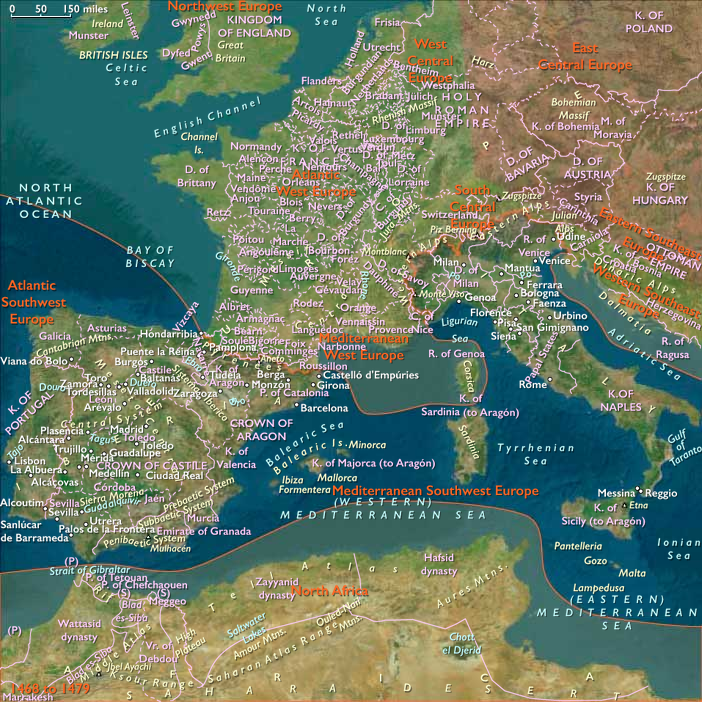
Southwest Europe
View →Subregions
