The Romanization of the Iberians accelerates rapidly…
45 BCE to 99 CE
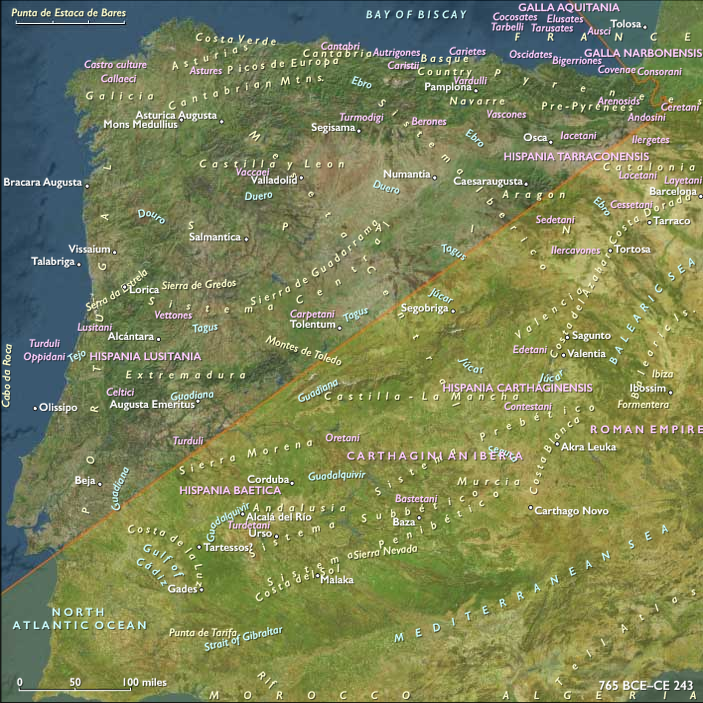
The Romanization of the Iberians accelerates rapidly following their conquest. The region, known to the Romans as Hispania, is not a single political entity but is divided into three separately governed provinces, a number that will expand to nine by the fourth century CE.
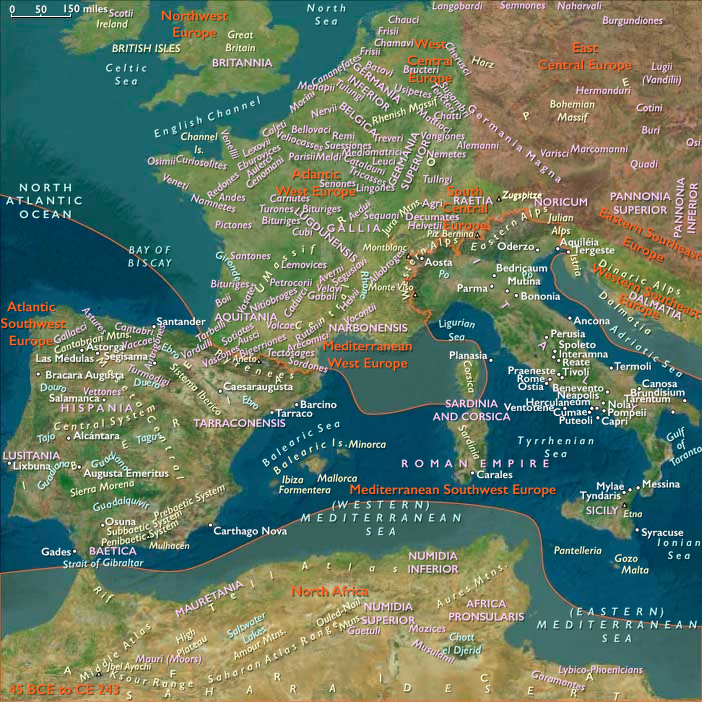
More significantly, for over four centuries, Hispania remains an integral part of a cosmopolitan Roman world empire, bound together by law, language, and an extensive network of Roman roads.
Integration into the Roman World
Iberian tribal leaders and urban oligarchs are incorporated into the Roman aristocracy, gaining influence in the governance of both Hispania and the broader empire. The latifundia (sing. latifundio)—large estates controlled by the aristocracy—are superimposed onto the existing Iberian landholding system, reinforcing a social and economic hierarchy that will endure for centuries.
The Romans enhance existing cities and establish new urban centers, including Zaragoza, Mérida, and Valencia. Roman infrastructure, including roads, aqueducts, and public buildings, brings new amenities and services to the region.
Economic Expansion Under Roman Rule
Under Roman administration, Spain’s economy flourishes. Alongside North Africa, Hispania serves as a major granary for the Roman market, supplying essential goods such as grain, gold, wool, olive oil, and wine. Agricultural productivity is further improved through Roman-engineered irrigation projects, some of which remain in use today.
Hispano-Romans and the Path to Citizenship
By the end of the first century CE, the Hispano-Romans—a population comprising Romanized Iberians and the descendants of Roman soldiers and settlers born in Hispania—have achieved full Roman citizenship.
Hispania also plays a key role in shaping the Roman Empire’s leadership, producing some of its most notable emperors, including:
- Trajan (r. 98–117 CE),
- Hadrian (r. 117–138 CE), and
- Marcus Aurelius (r. 161–180 CE).
People
Groups
Commodities
Regions
Southwest Europe
View →Subregions