The Portuguese begin to import more enslaved…
1540 CE to 1683 CE
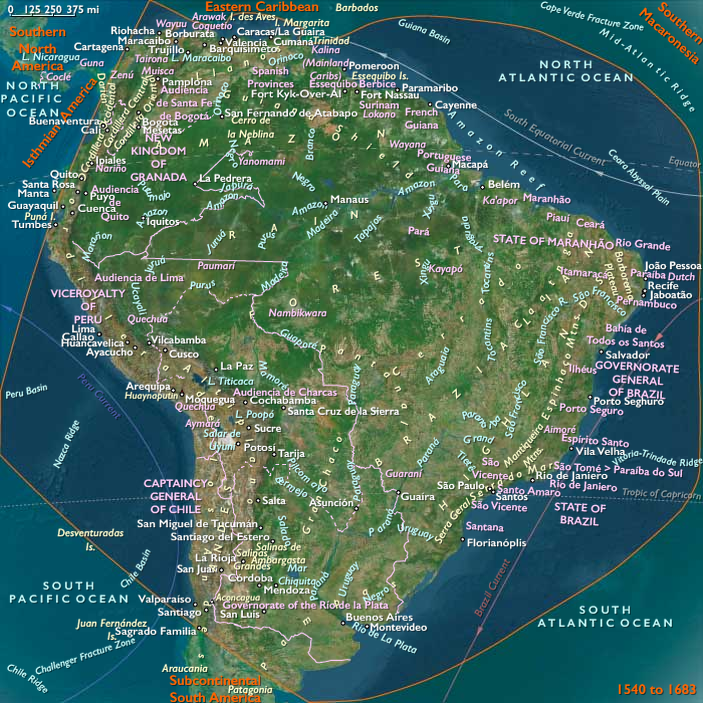
In 1570 there are two thousand to three thousand such slaves in Brazil; by 1587 there are fourteen thousand.
Considering that the European population in 1570 is twenty thousand seven hundred and sixty and in 1585 is twenty-nine thousand four hundred, the growth of enslaved Africans from fourteen percent of the number of whites to forty-seven percent is striking.
Much of the commentary on native slavery holds that the natives were unfit physically to be slaves, when actually it was their strong resistance to slavery and the colonial competition for their labor that led to the African slave trade.
Also, the focus of many historians on Bahia and Pernambuco has left readers with the impression that native slavery gave way to African slavery throughout Brazil by 1600.
This is not the case.
Natives continue to be enslaved in Para, which will cause the depopulation of much of Amazonia by the mid-eighteenth century.
Locations
People
Groups
Caeté people
View →
Tupinambá
View →
Brazil, Indigenous people in
View →
Portuguese people
View →
French people (Latins)
View →
Aimoré people
View →
Christians, Roman Catholic
View →
France, (Valois) Kingdom of
View →
Portugal, Avizan (Joannine) Kingdom of
View →
Portuguese Empire
View →
Brazil, Colonial
View →
Jesuits, or Order of the Society of Jesus
View →
France, (Bourbon) Kingdom of
View →
Topics
Commodities
Regions
South America
View →Subregions