Atlantic West Europe (1348–1349): The Black Death…
1348 CE to 1359 CE
Atlantic West Europe (1348–1349): The Black Death and Profound Transformation
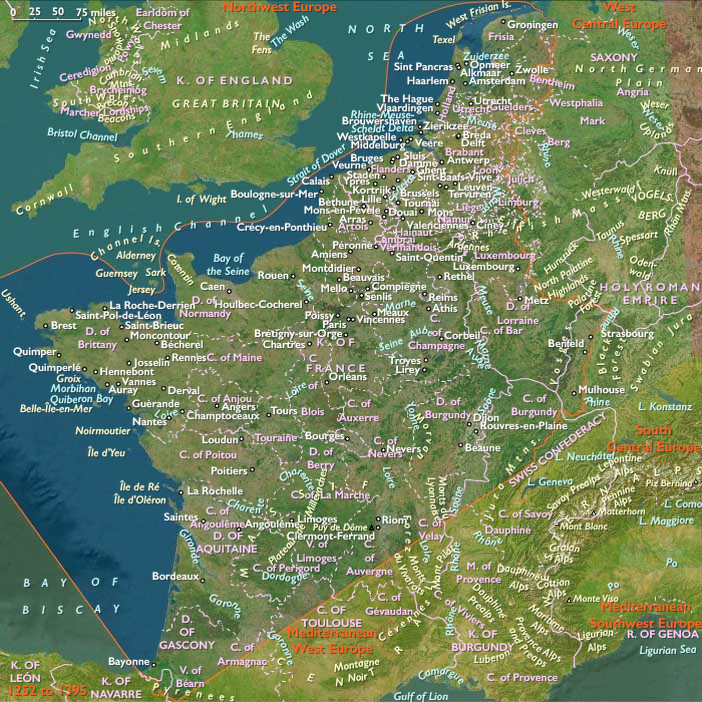
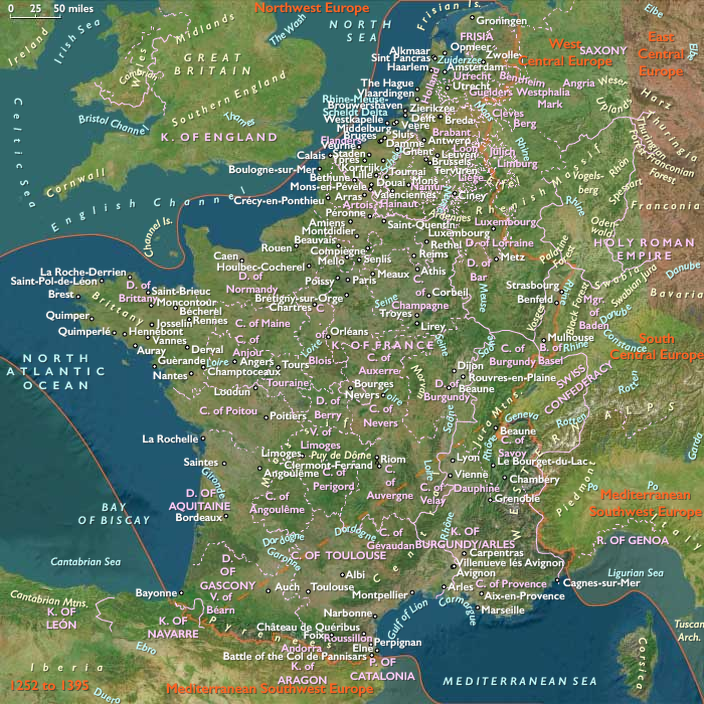
From 1348 to 1349, Atlantic West Europe—covering the Low Countries, Brittany, Normandy, Burgundy, Aquitaine, central France, Alsace, and Franche-Comté—faced one of its most catastrophic periods with the arrival of the Black Death, causing unprecedented demographic collapse, profound economic disruption, social upheaval, and lasting cultural transformation.
Political and Military Developments
-
France: Royal Authority Under Pressure
- King Philip VI (r. 1328–1350), already strained by the early stages of the Hundred Years' War, confronted drastically reduced resources due to population loss and economic contraction caused by the plague.
- Governance was severely disrupted as numerous officials, clergy, and nobility succumbed to the disease.
-
Low Countries: Economic and Urban Instability
- Major trading cities like Bruges, Ghent, and Antwerp experienced dramatic population declines and economic instability, temporarily weakening their positions as trade hubs.
- Urban governance faced significant challenges, leading to internal tensions and struggles over limited resources.
-
Burgundy, Alsace, and Franche-Comté: Regional Crisis
- The Black Death deeply destabilized Burgundy, Alsace, and Franche-Comté, reducing agricultural productivity, weakening feudal structures, and disrupting local governance.
- Territorial rulers, such as the Dukes of Burgundy, struggled to manage the economic collapse and resultant social unrest.
-
Aquitaine and Gascony: English Administration Strained
- English control in Gascony, already tenuous, was severely undermined by the plague's impact on governance and local economies, complicating military and political objectives amid ongoing Anglo-French tensions.
-
Brittany and Normandy: Devastation and Instability
- Normandy experienced severe mortality rates, significantly weakening local feudal structures and royal administration, increasing social tensions and instability.
- Brittany, under Duke Charles of Blois, faced immense social disruption and heightened political tensions amid its ongoing succession crisis with the Montfort faction.
Economic and Social Developments
-
Demographic Catastrophe
- The Black Death, arriving in 1348, ravaged Atlantic West Europe, reducing the population by an estimated one-third to one-half in many regions, fundamentally altering demographic patterns.
- Urban areas, particularly commercial centers in Flanders and northern France, suffered dramatic population losses, severely impacting trade and commerce.
-
Economic Collapse and Labor Shortages
- Massive population declines created acute labor shortages, sharply increasing wages and shifting economic leverage toward surviving peasants and laborers.
- Agricultural output plummeted, leading to severe food shortages and inflation, exacerbating social tensions across the region.
-
Social Dislocation and Revolt
- Social hierarchies weakened under the plague’s impact, leading to increasing peasant and urban unrest, foreshadowing future revolts and demands for improved living conditions and reduced feudal obligations.
Cultural and Intellectual Developments
-
Cultural Impact of Mortality
- Art and literature of the era reflected grim preoccupations with death, judgment, and salvation, marking a turning point in cultural attitudes toward mortality and spirituality.
- Artistic expression, notably in illuminated manuscripts and church frescoes, vividly captured themes of suffering, mortality, and divine judgment.
-
Intellectual Crisis and Transformation
- The University of Paris and other intellectual centers saw disruptions as prominent scholars fell victim to the plague, temporarily stalling intellectual activity and forcing a reconsideration of theological explanations of suffering and divine punishment.
Religious Developments
-
Church Authority Challenged
- Clergy mortality rates were exceptionally high due to their pastoral care roles, weakening church institutions and leading to widespread questioning of religious authority.
- Spiritual responses ranged from intensified religious devotion to the emergence of apocalyptic movements and new forms of religious expression, including the rise of flagellant movements.
-
Growth of Lay Religious Movements
- As traditional clergy structures weakened, lay confraternities and local religious movements gained prominence, reshaping popular religious practices and attitudes.
Legacy and Significance
The catastrophic Black Death of 1348–1349 fundamentally reshaped Atlantic West Europe, bringing dramatic demographic loss, economic transformation, and profound social change. This period marked a watershed moment, triggering structural shifts in feudalism, accelerating economic diversification, undermining traditional religious authority, and reshaping cultural outlooks. These developments established a transformed regional landscape that would deeply influence the political, economic, and cultural trajectories of subsequent eras.
Groups
Commodities
Subjects
Regions
West Europe
View →Subregions