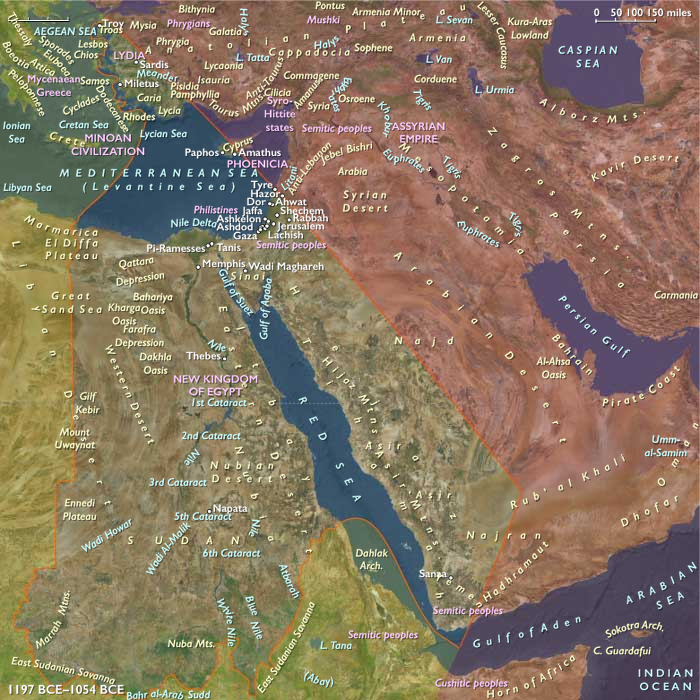
The Near East (1197–1054 BCE): Collapse, Realignment,…
1197 BCE to 1054 BCE
The Near East (1197–1054 BCE): Collapse, Realignment, and New Beginnings
Decline of Egyptian Influence
By the eleventh century BCE, the authority of Egypt's New Kingdom dynasties significantly diminishes, resulting in the fragmentation of Egypt itself and the loss of Egyptian control over Kush. Little information is available about Kush's subsequent three centuries, marking a gap in historical records.
Rise of the Israelites and Philistines
Between 1220 and 1190 BCE, the conquest of Canaan by the Israelite tribes concludes, with tribes settling lands both west and east of the Jordan River. Around this period, the Philistines, originating from Mycenaean Greece as part of the Sea Peoples, invade coastal Canaan, establishing dominance particularly in Gaza—from which "Palestine" eventually derives its name.
Philistine settlements such as Ashkelon, Ashdod, Ekron, and Gath reveal clear Mycenaean influences, notably in their distinctive bichrome pottery. Architectural and cultic remnants at Ekron further highlight their Aegean origins and cultural traditions.
Cypriot Cultural Synthesis
Cyprus experiences significant cultural changes, transitioning from the Late Bronze Age to the Iron Age, influenced by mainland settlers and widespread introduction of iron technology. Myths surrounding the island, especially the cult of Aphrodite at Paphos, emphasize Cyprus's enduring cultural and religious significance.
The Fall of Troy and the Trojan War Legend
Archaeological evidence at Troy VIIa (circa 1190 BCE) aligns closely with Homer’s account of the Trojan War. Excavations reveal widespread destruction likely resulting from conflict, consistent with legendary narratives describing the siege and ultimate downfall of Troy.
South Arabian Legends and Origins
In Arabian tradition, Qahtan, a legendary ancestor linked to the Biblical Joktan, emerges as the forefather of the South Arabian peoples, marking the beginning of Yemen’s genealogical and cultural identity.
Regional Transformations Post-Bronze Age Collapse
Following the Bronze Age Collapse, northern Canaanite cities, notably Phoenicia, remain relatively intact, while new communities fill the highlands, shedding the earlier city-state structure. Coastal regions see the rise of non-Canaanite settlers, especially the Philistines, whose culture gradually merges with local traditions.
The Sea Peoples and Egyptian Conflicts
Pharaoh Ramesses III (1186 BCE) decisively confronts the Sea Peoples—coalitions including the Philistines, Tjeker, Shekelesh, Denyen, and others—around 1178 BCE. Despite victory, Egypt faces economic strain, droughts, famines, and eventual political fragmentation. The first known labor strike in recorded history occurs during Ramesses III’s reign due to severe famine.
Emergence of Neo-Hittite Lydia
Following the collapse of the Hittite Empire, the region of Lydia (ancient Arzawa) rises as a Neo-Hittite state. Greek sources recount a famine-driven migration from Lydia to Italy, reputedly leading to the origins of the Etruscans.
New Cultural Centers and Urban Evolution
Cities such as Amathus on Cyprus and Hazor, Shechem, and Lachish in Canaan flourish and decline within this tumultuous period. Notably, Hazor experiences catastrophic destruction around 1200 BCE, aligning with biblical accounts of its defeat under Joshua.
Alphabetic Writing Developments
The Proto-Sinaitic script, possibly developed by Semitic workers in Egyptian turquoise mines, evolves during this period into the Proto-Canaanite alphabet, laying foundational developments for future alphabets including Phoenician.
Israelite Settlements and Conflicts
Sites such as Mount Ebal provide archaeological evidence supporting biblical traditions, including altars attributed to the Israelites’ early settlement. Conflicts involving Sisera at Harosheth Haggoyim (El-ahwat) illustrate the dynamic cultural and military shifts occurring in Canaan.
Conclusion
Between 1197 and 1054 BCE, the Near East experiences a profound transformation marked by the decline of Egyptian dominance, the rise of new peoples and states, significant cultural syncretism, and pivotal technological advances. These developments profoundly shape the region's subsequent history, transitioning from the Bronze Age's end into the dawn of the Iron Age.
People
Groups
Topics
Commodities
Subjects
Regions
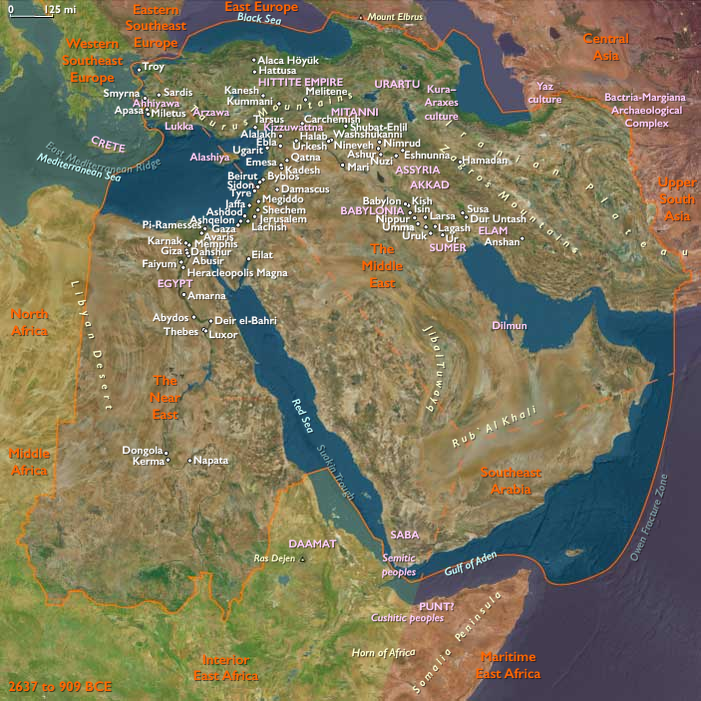
The Near and Middle East
View →Subregions