Atlantic Southwest Europe (1252 – 1395 CE):…
1252 CE to 1395 CE
Atlantic Southwest Europe (1252 – 1395 CE): Wool, Iron, Wine, and the Atlantic Turn
Geographic and Environmental Context
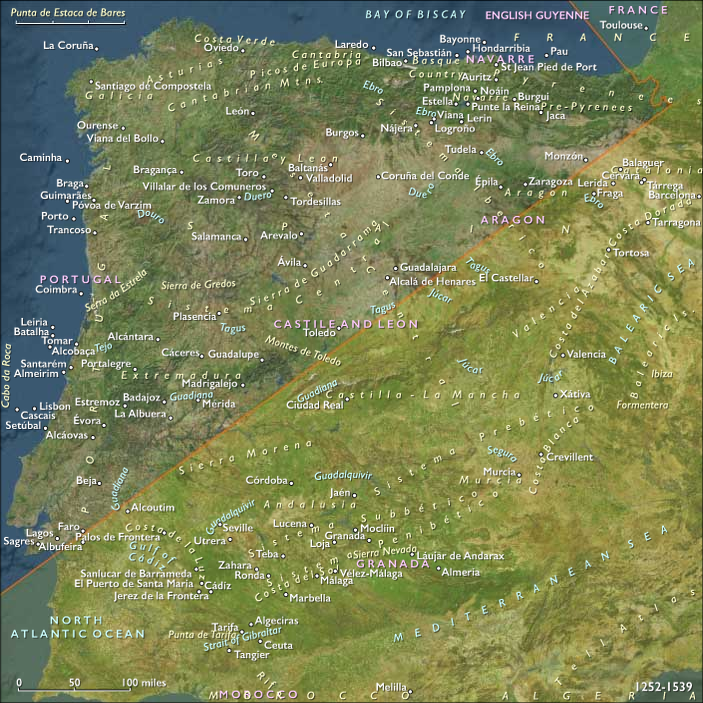
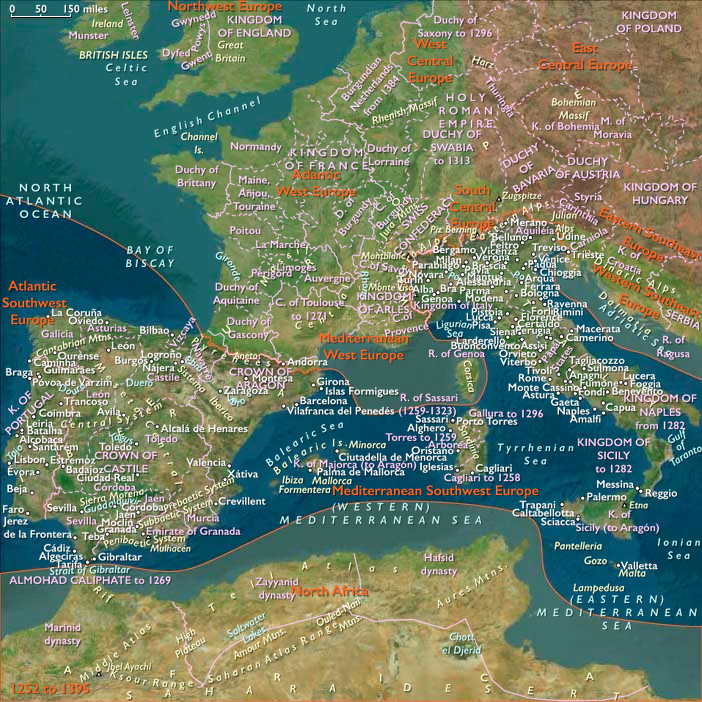
Atlantic Southwest Europe includes Portugal’s Lisbon, Beira, Minho, Trás-os-Montes, and Spain’s Galicia, Asturias, Cantabria, Basque Country, Castile and León, northern Rioja, and northern Navarra.
-
Anchors: the Cantabrian coast (A Coruña–Gijón–Santander–Bilbao–San Sebastián), the Douro/Minho estuaries, and the Meseta–Cantabrian passes binding the plateau to Atlantic ports.
Climate and Environmental Shifts
-
Little Ice Age onset (~1300) brought cooler, wetter weather; stormier Bay of Biscay; good fisheries persisted.
-
Black Death (1348–1352) hit towns hard; ports recovered quickest via maritime trade.
Societies and Political Developments
-
Castile and León unified under Alfonso X (r. 1252–1284), then fractured and reconsolidated amid the Trastámara coup (Pedro I vs Enrique II, 1366–1369).
-
Portugal strengthened under Afonso III and Dinis (reforestation of Leiria for ship timber; University of Coimbra 1290), then defended independence in the Crisis of 1383–1385; João I and Aljubarrota (1385) sealed the Anglo-Portuguese alliance (Treaty of Windsor, 1386).
-
Navarre navigated between France and Castile; Basque towns (Bilbao, charter 1300; San Sebastián) grew as maritime communes.
Economy and Trade
-
Wool complex: Castilian wool—organized by the Mesta (founded 1273)—flowed through Burgos, León, and Cantabrian ports to Flanders and England.
-
Basque iron & shipbuilding: forges supplied anchors, nails, artillery shot; yards built cogs and naos for Atlantic service and whaling.
-
Wine & salt fish: Douro/Minho wines, Galician/Portuguese salt fish (cod, sardine) and tuna moved north; Lisbon/Porto emerged as major entrepôts.
-
Finance & law: municipal fueros, urban consulates, and English–Portuguese treaties stabilized credit, convoys, and tariffs.
Subsistence and Technology
-
Mixed Atlantic polyculture (rye/wheat, vines, chestnuts, cattle); stern-rudder hulls, improved rigging, magnetic compass and portolan practice diffused into Iberian waters.
Movement and Interaction Corridors
-
Sea: Lisbon ⇄ London/Bristol; Cantabria ⇄ Flanders; Galicia ⇄ Brittany; pilgrim sailings to Santiago.
-
Land: Meseta passes fed Burgos, León, Salamanca; Douro road/river linked Castile to Porto.
Belief and Symbolism
-
Cathedrals and monasteries in Santiago, León, Burgos, Salamanca; confraternities of sailors and merchants venerating St. James and St. Nicholas kept social cohesion in plague decades.
Adaptation and Resilience
-
Route redundancy (many ports, multiple passes), portfolio exports (wool–iron–wine–fish–salt), and crown–town compacts hedged risk from war, weather, and plague.
Long-Term Significance
By 1395, the Atlantic façade from Lisbon to San Sebastián had become a maritime-industrial platform: wool, iron, wine, and shipbuilding—backed by Portugal’s English alliance—set the stage for the 15th-century Atlantic turn and overseas exploration.
Images

Atlantic Southwest Europe (with civilization) ©2024-25 Electric Prism, Inc. All rights reserved.
People
Groups
Topics
Subjects
Regions
Southwest Europe
View →Subregions