Atlantic Southwest Europe (1504–1515 CE): Iberian Renaissance…
1504 CE to 1515 CE
Atlantic Southwest Europe (1504–1515 CE): Iberian Renaissance at its Zenith, Portuguese Global Ascendancy, and Castilian-Aragonese Consolidation under Ferdinand II
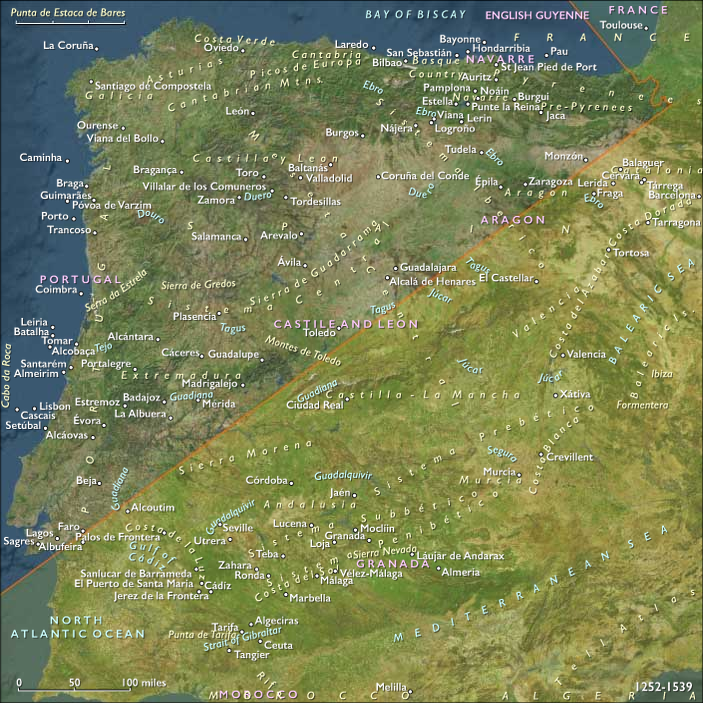
Between 1504 and 1515 CE, Atlantic Southwest Europe—including Galicia, northern and central Portugal, Asturias, Cantabria, and northern Spain south of the Franco-Spanish border (43.05548° N, 1.22924° W)—experienced the zenith of its Renaissance cultural flourishing and unprecedented global prominence. Portugal decisively cemented its maritime empire under King Manuel I, while Castile and Aragón underwent significant political realignment and consolidation under King Ferdinand II of Aragón following the death of Queen Isabella I in 1504. Navarre struggled diplomatically amid growing pressures, setting the stage for regional transformations. These developments fundamentally shaped Iberian identities, economic prosperity, global geopolitical ambitions, and intellectual vitality.
Political and Military Developments
Portuguese Global Empire under Manuel I
Under the visionary reign of King Manuel I (1495–1521 CE), Portugal decisively achieved unprecedented global maritime ascendancy. Portuguese navigators and explorers—including Francisco de Almeida, the first Viceroy of Portuguese India (1505), and Afonso de Albuquerque (1509–1515)—expanded Portugal’s dominance from Africa to India, East Asia, and Brazil (1500). Portugal’s strategic control over critical maritime routes established Lisbon as Europe’s richest trading capital, decisively solidifying Portuguese geopolitical influence and economic power.
Castilian-Aragonese Consolidation and Governance under Ferdinand II
Following the death of Queen Isabella I in 1504, Ferdinand II of Aragón (1479–1516 CE) decisively governed both Castile and Aragón, preserving political continuity and territorial unity. Ferdinand’s pragmatic rule stabilized internal governance, curbed aristocratic factionalism, and advanced administrative reforms. His regency over Castile (1507–1516), amid the perceived instability under his daughter Joanna and her husband Philip the Handsome, decisively maintained Iberian political stability and coherence.
Navarrese Diplomatic Struggles and Territorial Integrity
Navarre, under Queen Catherine I (1483–1517 CE), faced increased diplomatic tension due to intensifying Castilian and Aragonese ambitions. Navarre’s strategic position led to external pressures, significantly complicating regional autonomy and governance. Despite diplomatic efforts, by 1512 Ferdinand II’s forces invaded southern Navarre, decisively annexing it into Castile and Aragón, profoundly reshaping regional geopolitics and Navarrese autonomy.
Economic Developments
Agricultural Prosperity and Regional Stability
Agricultural productivity decisively remained robust, supported by diversified crops—including grains, vineyards, olives, citrus fruits, and almonds—as well as extensive livestock production. Mining activities, especially gold and silver extraction from Galicia and Asturias, significantly supported economic resilience and demographic stability throughout the region.
Portuguese Maritime Commerce and Global Trade Networks
Portugal decisively achieved global economic prosperity under Manuel I, dramatically expanding maritime trade through Lisbon, Porto, Braga, and Coimbra. The spice trade, precious metals, textiles, and luxury goods flowing from India, Africa, Brazil, and East Asia significantly boosted Portuguese economic prosperity and European commercial dominance. Galicia, particularly ports such as A Coruña, benefitted economically from increased maritime trade.
Castilian Economic Expansion and New World Resources
Under Ferdinand II, Castile decisively expanded economic prosperity through intensified resource extraction from American territories, especially gold and silver. Castilian commerce significantly flourished, with burgeoning trade networks enhancing regional economic resilience and prosperity.
Cultural and Religious Developments
Portuguese Renaissance and Manueline Flourishing
Portugal’s cultural Renaissance reached its zenith under Manuel I, epitomized by the lavish Manueline architectural style, a blend of Gothic, Renaissance, and maritime motifs. Portuguese scholarship, literature, cartography, scientific exploration, and humanist education significantly advanced. International intellectual exchanges enriched Portuguese culture, decisively influencing broader European Renaissance thought and artistic expression.
Castilian Renaissance Humanism under Ferdinand II
Under Ferdinand II, Castilian culture decisively flourished with continued Renaissance humanist influences. Intellectual patronage supported vibrant educational reforms, literary innovation, artistic projects, and scientific inquiry. Humanist exchanges with Italy and northern Europe significantly enriched Castilian cultural life, setting foundations for subsequent cultural and intellectual developments.
Galician Cultural Prominence and Ecclesiastical Patronage
Galicia decisively maintained cultural prominence, reinforced by Santiago de Compostela’s ecclesiastical patronage and pilgrimage traditions. Scholarship, manuscript preservation, artistic endeavors, and significant architectural projects continued, strengthening Galicia’s cultural identity, regional resilience, and international reputation.
Persistent Cultural Syncretism and Local Traditions
Orthodox Christianity consistently integrated indigenous Iberian and Celtic traditions, especially in rural Galicia and northern Portugal. This persistent cultural syncretism decisively reinforced regional identities, social cohesion, and cultural resilience amid rapid geopolitical and intellectual transformations.
Civic Identity and Governance
Portuguese Civic Unity and Global Ambitions
Portugal decisively reinforced civic unity, national identity, and governance stability under Manuel I. Maritime exploration significantly shaped Portuguese collective ambitions, laying critical foundations for global empire-building, economic prosperity, and cultural prominence.
Castilian-Aragonese Civic Unity and Centralized Governance
Under Ferdinand II’s governance, Castilian-Aragonese territories decisively consolidated civic unity, territorial integrity, and centralized administration. Effective governance, judicial reforms, and economic expansion profoundly shaped regional identities, political stability, and Renaissance cultural vitality.
Navarrese Regional Identity amid Diplomatic Tensions
Navarre struggled to preserve regional autonomy, diplomatic neutrality, and governance stability amid mounting external pressures. The decisive invasion of southern Navarre in 1512 profoundly reshaped Navarrese civic identity, governance structures, and regional autonomy.
Notable Regional Groups and Settlements
-
Portuguese: Achieved decisive global maritime ascendancy, economic prosperity, and Renaissance cultural flourishing under Manuel I, significantly shaping Portugal’s historical trajectory and global influence.
-
Castilians and Aragonese: Consolidated governance stability, territorial unity, cultural renewal, and global ambitions under Ferdinand II, significantly influencing Iberian political, intellectual, and cultural developments.
-
Galicians: Sustained vibrant economic resilience, cultural vitality, and ecclesiastical prominence, significantly reinforced by pilgrimage activity and global maritime trade.
-
Basques (Navarre): Faced diplomatic challenges and territorial threats, profoundly reshaping northern Iberian political coherence and regional autonomy.
Long-Term Significance and Legacy
Between 1504 and 1515 CE, Atlantic Southwest Europe:
-
Reached the pinnacle of Portuguese maritime dominance, global economic expansion, and Renaissance cultural flourishing, decisively establishing Portugal’s subsequent global empire and intellectual prominence.
-
Achieved significant Castilian-Aragonese political unification, administrative centralization, and Renaissance intellectual vitality under Ferdinand II, fundamentally transforming Iberian governance and regional identity.
-
Experienced the decisive annexation of southern Navarre into Castile-Aragón, profoundly reshaping regional geopolitics and territorial autonomy.
-
Maintained agricultural prosperity, dramatically expanded global commerce, pilgrimage-driven economic stability, and vibrant cultural innovation, profoundly influencing regional historical trajectories.
This transformative era decisively shaped regional identities, governance structures, economic continuity, cultural resilience, and intellectual foundations, profoundly influencing Atlantic Southwest Europe’s trajectory toward global prominence and fully realized Iberian Renaissance.
People
Groups
Topics
Commodities
Subjects
Regions
Southwest Europe
View →Subregions