
East Central Europe (1648–1659 CE): Treaty of …
Years: 1648 - 1659
East Central Europe (1648–1659 CE): Treaty of Westphalia, Post-War Reconstruction, and Shifting Alliances
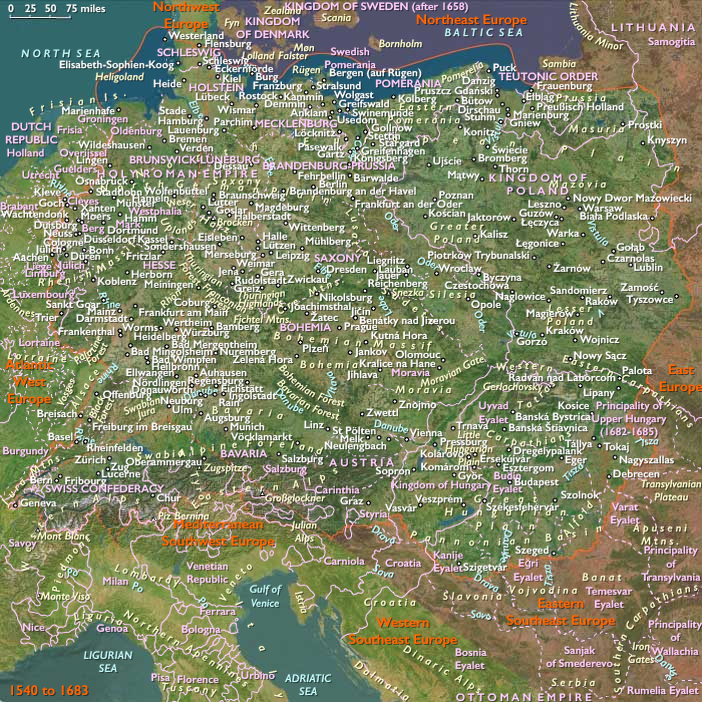
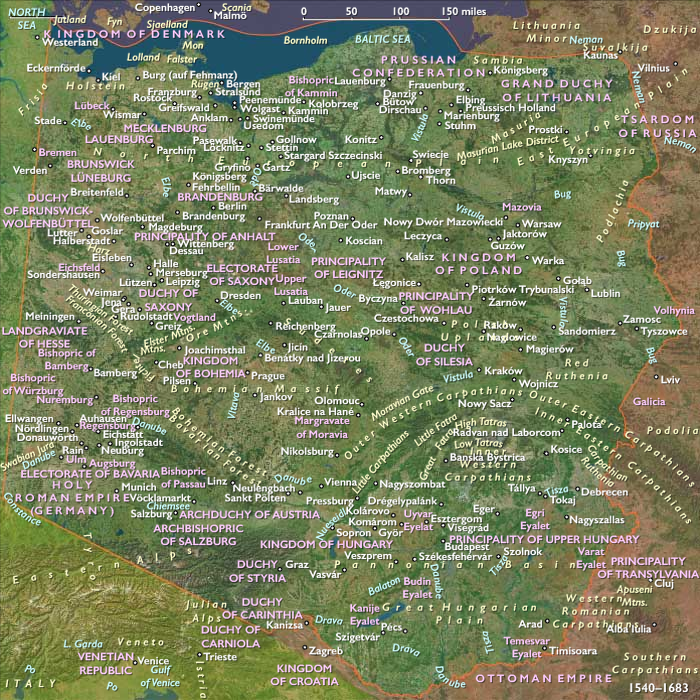
Between 1648 and 1659 CE, East Central Europe—encompassing modern-day Poland, Czechia, Slovakia, Hungary, and eastern Germany and Austria east of 10°E and northeast of the defined boundary—entered a critical phase marked by the conclusion of the Thirty Years' War, territorial realignments following the Peace of Westphalia (1648), and efforts toward post-war recovery. This period witnessed attempts at political stabilization, significant religious settlements, shifting diplomatic alliances, and gradual economic reconstruction, profoundly reshaping the region’s political landscape and establishing lasting frameworks for state sovereignty.
Political and Military Developments
Treaty of Westphalia (1648)
-
The Peace of Westphalia (1648)—comprising the Treaties of Münster and Osnabrück—ended the Thirty Years' War. The treaty significantly redefined sovereignty, granting German princes considerable autonomy and weakening central Imperial authority.
-
Territorial adjustments were extensive, including recognition of Dutch independence from Spain, Swedish acquisition of Pomerania, Wismar, and Bremen-Verden, and French gains in Alsace. These reshaped the Holy Roman Empire’s internal and external political landscape.
Impact on East Central European States
-
The Habsburg Monarchy emerged territorially intact but politically weakened, maintaining its core hereditary lands (Austria, Bohemia, Moravia) but facing reduced influence over the fragmented Imperial structure.
-
Saxony and Brandenburg-Prussia emerged strengthened, gaining recognition of their autonomy and expanded territories, setting the stage for Brandenburg-Prussia’s future prominence.
-
In Poland-Lithuania, stability remained precarious, intensified by internal aristocratic conflict and external threats from Sweden, Russia, and Ottoman-aligned Crimea.
Shifting Alliances and Continued Conflicts
-
Despite the Westphalian peace, conflicts continued along the eastern frontier. Poland, already weakened by the devastating Khmelnytsky Uprising (1648–1657), experienced further invasions by Russia (Russo-Polish War, 1654–1667) and Sweden (the "Deluge," 1655–1660), severely undermining its political cohesion.
-
Brandenburg-Prussia maneuvered diplomatically, notably in aligning with Sweden and then Poland-Lithuania at different points, signaling growing regional ambition.
Economic and Technological Developments
Slow Economic Recovery and Reconstruction
-
Post-war recovery efforts began gradually across East Central Europe, particularly in the devastated German principalities, Bohemia, Moravia, and Silesia. Restoration of agriculture, trade networks, and urban economies was slow but steady, hindered by severe population losses and damaged infrastructure.
-
Increased investment in agricultural technology, infrastructure repair, and resettlement programs sought to revive economic productivity and demographic stability.
Cultural and Artistic Developments
Baroque Culture and Artistic Revival
-
The post-war environment fostered a resurgence of Baroque art and architecture, symbolizing religious renewal, political stabilization, and cultural revival. Major cities such as Vienna, Prague, Dresden, and Kraków saw significant Baroque construction projects in churches, palaces, and civic buildings, reflecting restored royal and ecclesiastical patronage.
-
Literary and musical cultures gradually recovered, though intellectual and artistic production remained initially limited by economic constraints and demographic decline.
Settlement and Urban Development
Urban Reconstruction and Repopulation Efforts
-
Significant rebuilding and expansion of damaged urban centers commenced, notably in Vienna, Dresden, Leipzig, Prague, and Kraków. Post-war urban planning emphasized fortification enhancement, administrative reorganization, and infrastructure improvements.
-
Extensive resettlement programs brought colonists, craftsmen, and agricultural settlers, particularly into Brandenburg-Prussia, Silesia, and Bohemia, initiating demographic recovery.
Social and Religious Developments
Westphalian Religious Settlement
-
The Westphalian peace reinforced religious divisions, confirming the principles of "cuius regio, eius religio" (whose realm, their religion), thus securing Protestant rights in predominantly Lutheran and Calvinist regions within the Empire. Religious coexistence was institutionalized, stabilizing the confessional landscape but solidifying sectarian divides.
-
Catholic Counter-Reformation efforts intensified within Habsburg territories, promoting Catholic education, missionary activity, and ecclesiastical authority, deeply influencing regional religious culture.
Long-Term Consequences and Historical Significance
The era 1648–1659 CE fundamentally reshaped East Central Europe’s political, religious, and economic trajectory. The Treaty of Westphalia established lasting principles of sovereignty and territorial integrity, dramatically reducing Imperial authority and shaping subsequent European diplomacy. Persistent conflicts, notably Poland’s devastating encounters with Sweden and Russia, weakened its political cohesion. Meanwhile, Brandenburg-Prussia’s strategic maneuvers positioned it as an emerging regional power. Post-war economic and demographic recovery efforts, coupled with cultural revival under Baroque patronage, laid foundations for East Central Europe's gradual stabilization and its complex engagement with the early modern European order.
Groups
- Polytheism (“paganism”)
- Saxons
- Germans
- Hungarian people
- Wends, or Sorbs (West Slavs)
- Christianity, Chalcedonian
- Bavarians (West Germanic tribe)
- Thuringia, Duchy of
- Passau, Bishopric of
- Saxony, Duchy of
- Germany, Kingdom of (within the Holy Roman Empire)
- Holy Roman Empire
- Slovaks (West Slavs)
- Carinthia, Duchy of
- Austria, Margravate of
- Czechs [formerly Bohemians] (West Slavs)
- Hanseatic league (informally organized)
- Hungary, Kingdom of
- Bamberg, Prince-Bishopric of
- Poland, Greater
- Mazovia, Duchy of
- Austria, Archduchy of
- Bohemia, Kingdom of
- Styria, Duchy of
- Lübeck, Free City of
- Brunswick-Lüneburg, Duchy of
- Regensburg (Ratisbon), Imperial Free City of
- Cammin, Prince-Bishopric of
- Anhalt-Bernburg, Principality of
- Anhalt-Zerbst, Principality of
- Regensburg, Prince-Bishopric of
- Holy Roman Empire
- Brunswick-Wolfenbüttel, Duchy of
- Salzburg, Archbishopric of
- Poland of the later Piasts, Kingdom of
- Lithuania, Grand Duchy of
- Mecklenburg, Duchy of
- Ottoman Empire
- Palatinate, Electoral (Wittelsbach)
- Saxony, Electorate of
- Crown of the Kingdom of Poland
- Poland of the Jagiellonians, Kingdom of
- Lithuania, Grand Duchy of
- Saxe-Lauenburg, Duchy of
- Brandenburg, (Hohenzollern) Margravate of
- Prussian Confederation
- Crimean Khanate
- Transylvania (Hungarian governate)
- Ottoman Empire
- Teutonic Knights of Prussia, or Monastic state of the Teutonic Knights (House of the Hospitalers of Saint Mary of the Teutons in Jerusalem)
- Prussia, Royal (autonomous subject of the Polish Crown)
- Bavaria, Wittelsbach Duchy of
- Lutheranism
- Sweden, (second) Kingdom of
- Hungary, Royal
- Calvinists
- Jesuits, or Order of the Society of Jesus
- Hungary, Ottoman
- Hungary (Transylvania), Ottoman vassal Kingdom of
- Russia, Tsardom of
- Swedish Empire
- Anhalt-Köthen, Principality of
- Saxe-Coburg, Duchy of
- Saxe-Eisenach, Duchy of
- Saxe-Weimar, Duchy of
- France, (Bourbon) Kingdom of
- Mecklenburg-Güstrow, Duchy of
- Mecklenburg-Schwerin, Duchy of
- Anhalt-Plotzkau, Principality of
- Anhalt-Dessau
- Anhalt-Dessau, Principality of
- Brandenburg-Prussia
Topics
- Humanism, Renaissance
- Renaissance Architecture
- Protestant Reformation
- Counter-Reformation (also Catholic Reformation or Catholic Revival)
- Thirty Years' War
- Khmelnytsky Uprising, or Chmielnicki's Revolt
- Deluge, the (Poland)
Commodoties
Subjects
Regions
Subregions
Related Events
Showing 10 events out of 31953 total
Years: 1648 - 1659
Groups
- Polytheism (“paganism”)
- Saxons
- Germans
- Hungarian people
- Wends, or Sorbs (West Slavs)
- Christianity, Chalcedonian
- Bavarians (West Germanic tribe)
- Thuringia, Duchy of
- Passau, Bishopric of
- Saxony, Duchy of
- Germany, Kingdom of (within the Holy Roman Empire)
- Holy Roman Empire
- Slovaks (West Slavs)
- Carinthia, Duchy of
- Austria, Margravate of
- Czechs [formerly Bohemians] (West Slavs)
- Hanseatic league (informally organized)
- Hungary, Kingdom of
- Bamberg, Prince-Bishopric of
- Poland, Greater
- Mazovia, Duchy of
- Austria, Archduchy of
- Bohemia, Kingdom of
- Styria, Duchy of
- Lübeck, Free City of
- Brunswick-Lüneburg, Duchy of
- Regensburg (Ratisbon), Imperial Free City of
- Cammin, Prince-Bishopric of
- Anhalt-Bernburg, Principality of
- Anhalt-Zerbst, Principality of
- Regensburg, Prince-Bishopric of
- Holy Roman Empire
- Brunswick-Wolfenbüttel, Duchy of
- Salzburg, Archbishopric of
- Poland of the later Piasts, Kingdom of
- Lithuania, Grand Duchy of
- Mecklenburg, Duchy of
- Ottoman Empire
- Palatinate, Electoral (Wittelsbach)
- Saxony, Electorate of
- Crown of the Kingdom of Poland
- Poland of the Jagiellonians, Kingdom of
- Lithuania, Grand Duchy of
- Saxe-Lauenburg, Duchy of
- Brandenburg, (Hohenzollern) Margravate of
- Prussian Confederation
- Crimean Khanate
- Transylvania (Hungarian governate)
- Ottoman Empire
- Teutonic Knights of Prussia, or Monastic state of the Teutonic Knights (House of the Hospitalers of Saint Mary of the Teutons in Jerusalem)
- Prussia, Royal (autonomous subject of the Polish Crown)
- Bavaria, Wittelsbach Duchy of
- Lutheranism
- Sweden, (second) Kingdom of
- Hungary, Royal
- Calvinists
- Jesuits, or Order of the Society of Jesus
- Hungary, Ottoman
- Hungary (Transylvania), Ottoman vassal Kingdom of
- Russia, Tsardom of
- Swedish Empire
- Anhalt-Köthen, Principality of
- Saxe-Coburg, Duchy of
- Saxe-Eisenach, Duchy of
- Saxe-Weimar, Duchy of
- France, (Bourbon) Kingdom of
- Mecklenburg-Güstrow, Duchy of
- Mecklenburg-Schwerin, Duchy of
- Anhalt-Plotzkau, Principality of
- Anhalt-Dessau
- Anhalt-Dessau, Principality of
- Brandenburg-Prussia
Topics
- Humanism, Renaissance
- Renaissance Architecture
- Protestant Reformation
- Counter-Reformation (also Catholic Reformation or Catholic Revival)
- Thirty Years' War
- Khmelnytsky Uprising, or Chmielnicki's Revolt
- Deluge, the (Poland)
Commodoties
Subjects
Regions
Subregions