
Melanesia (1396–1539 CE) Highland Gardens, Island …
Years: 1396 - 1539
Melanesia (1396–1539 CE)
Highland Gardens, Island Chiefdoms, and Expanding Voyaging Worlds
Geography & Environmental Context
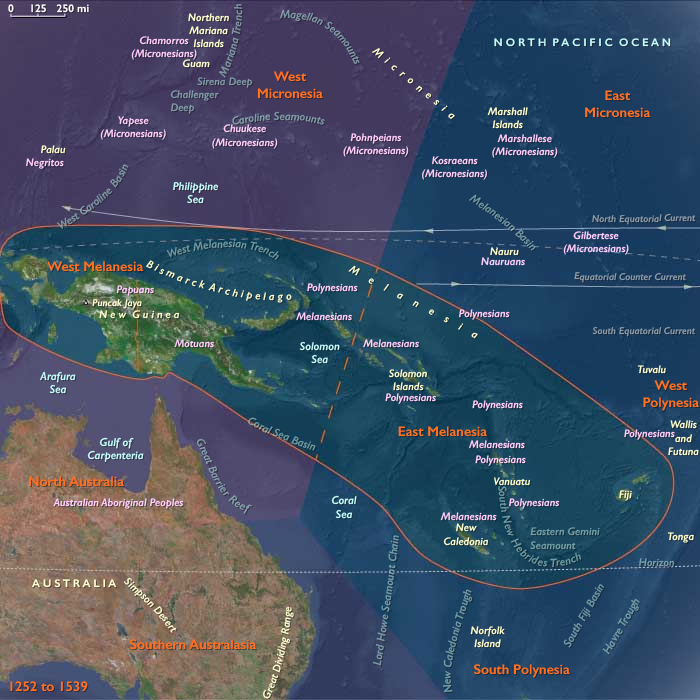
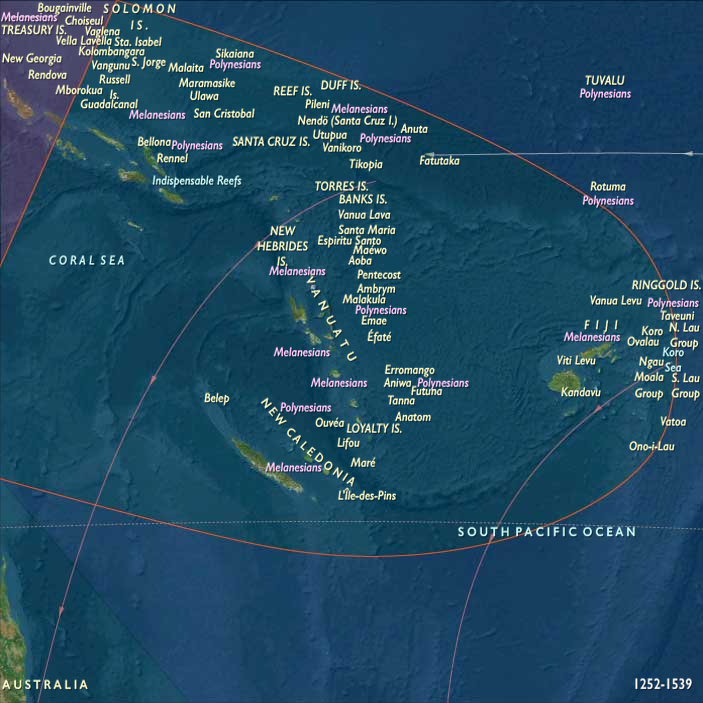
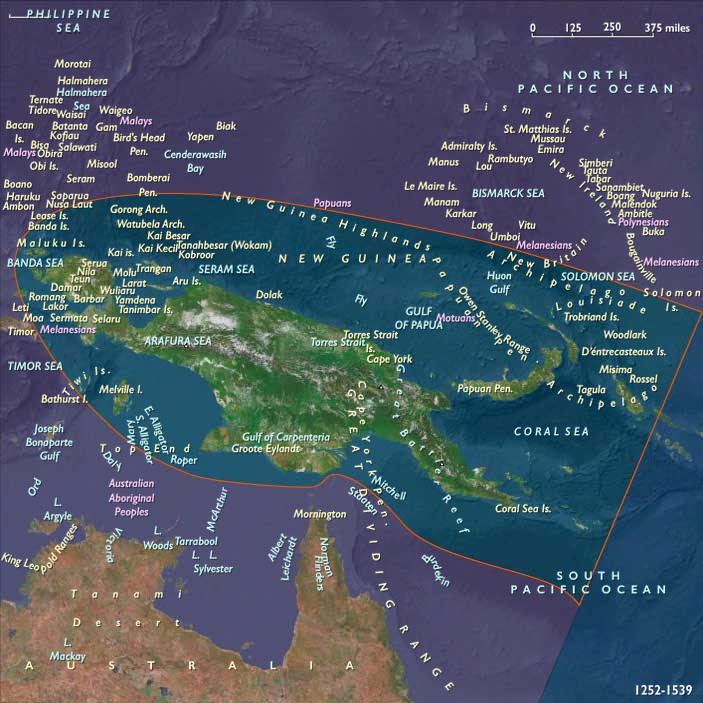
Melanesia in this era comprised two great spheres: West Melanesia—New Guinea, the Bismarck Archipelago, and Bougainville—and East Melanesia, including Vanuatu, Fiji, New Caledonia, and the Solomon Islands (excluding Bougainville).
Rugged volcanic highlands, fertile valleys, and mangrove estuaries defined the larger islands; coral reefs, lagoons, and uplifted limestone ridges shaped the outer chains. From the misted mountains of New Guinea to the reefed coasts of Fiji and Vanuatu, landscapes yielded a rich mosaic of terrestrial and marine resources that sustained some of the Pacific’s densest pre-state populations.
Climate & Environmental Shifts
The early Little Ice Age brought modest cooling and rainfall variability.
-
In New Guinea’s highlands, cooler nights shortened some growing seasons, but intensive terrace agriculture buffered production.
-
Coastal and island zones faced alternating droughts and floods linked to ENSO (El Niño–Southern Oscillation) cycles.
-
Periodic cyclones reshaped coastlines in the Solomons and Vanuatu, while volcanic eruptions in the Bismarcks renewed soils but occasionally displaced settlements.
Despite these fluctuations, fertile volcanic landscapes and flexible subsistence systems ensured long-term stability.
Subsistence & Settlement
-
Highlands of New Guinea: Intensive irrigated taro terraces, kaukau (sweet potato) fields, and pig husbandry supported large, semi-permanent villages—among the world’s most densely settled non-literate societies.
-
Coastal and island Melanesia: Mixed horticulture of taro, yam, banana, breadfruit, and sago complemented reef and pelagic fishing. Domesticated pigs and chickens formed the basis of feasting economies.
-
Fortified settlements: Earthworks and palisades guarded villages in Vanuatu, Fiji, and the Solomons, reflecting inter-island rivalry and the consolidation of chiefly power.
-
Village patterns: Extended kin compounds clustered around ceremonial grounds and men’s houses, integrating social and ritual life.
Technology & Material Culture
Material traditions combined agricultural ingenuity with maritime reach.
-
Agriculture: Highland irrigation ditches, drainage systems, and stone terraces sustained continuous cropping. Coastal groups cultivated shifting gardens balanced by fallow rotation.
-
Seafaring: Outrigger and double-hulled canoes enabled inter-island trade, raiding, and alliance formation.
-
Crafts: Polished stone adzes, obsidian blades (especially from New Britain), and shell ornaments served as utilitarian and prestige items.
-
Architecture & art: Ceremonial houses adorned with carved masks, ancestor figures, and geometric motifs embodied social hierarchy and cosmological order. Woven mats, feather regalia, and barkcloth symbolized chiefly rank and exchange wealth.
Movement & Interaction Corridors
Melanesia lay at the crossroads of the Pacific’s great exchange routes.
-
Westward connections: Coastal and island voyagers from the Bismarck and Admiralty Islands exchanged obsidian, shell, and ritual valuables across the Solomon Sea, linking to the Moluccas and Southeast Asia.
-
Eastward networks: Canoes from Fiji, Vanuatu, and the Solomons maintained regular contact, sharing goods, songs, and kin. Fijian chiefdoms traded ʻie tōga mats and ornaments with Tonga and Samoa, forging the first durable Melanesian–Polynesian interface.
-
Highland exchanges: Trails across New Guinea’s valleys carried salt, stone, and pigs between ecological zones, weaving dispersed settlements into dense webs of mutual obligation.
Cultural & Symbolic Expressions
Ritual life unified politics, economy, and ecology.
-
Ancestral veneration: Lineages traced descent from founding spirits embodied in masks, skulls, and carved figures. Ceremonies renewed these bonds through dance, song, and feasting.
-
Feasting & exchange: Pigs and shell valuables circulated in cycles of reciprocity that displayed wealth and stabilized alliances.
-
Ceremonial architecture: Men’s houses in the Bismarcks and Sepik served as centers of initiation, governance, and sacred display.
-
Oral literature: Epics, chants, and creation songs transmitted genealogies and law, preserving identity across shifting alliances.
-
Kava ritual (Fiji): Ceremonial drinking linked chiefs and gods, anchoring authority in sacred etiquette and collective memory.
Environmental Adaptation & Resilience
Melanesian communities integrated environmental management with social order.
-
Crop diversification: Multiple taro and yam varieties hedged against climatic stress.
-
Redistribution: Chiefs orchestrated the movement of surplus food to cyclone-affected islands.
-
Mobility & alliance: Canoe routes enabled refuge migration and inter-island support after disasters.
-
Ritual ecology: Sacred groves, reef taboos, and water deities codified conservation ethics long before European observation.
-
Highland engineering: Drainage and irrigation balanced fluctuating rainfall, ensuring sustained fertility even through cooler centuries.
Transition (to 1539 CE)
By 1539, Melanesia stood as a world of immense diversity—densely populated highlands, maritime chiefdoms, and far-reaching trade networks binding the Bismarcks, Solomons, Vanuatu, Fiji, and New Caledonia.
Fijian and Vanuatuan polities consolidated hierarchical rule; New Guinea’s highlands perfected intensive agriculture; Bougainville and the Bismarcks thrived on obsidian and shell trade.
Ritual exchange, ancestor veneration, and seafaring linked these systems into a single cultural continuum.
No European ships had yet crossed its seas, but Melanesia already sustained a flourishing civilization—complex, adaptive, and deeply interwoven with its ocean and mountains, poised on the threshold of global encounter.
Groups
Topics
Commodoties
Subjects
Regions
Subregions
Related Events
Showing 10 events out of 43406 total
Years: 1396 - 1539
Groups
Topics
Commodoties
Subjects
Regions
Subregions