East Asia (1396–1539 CE) Ming Consolidation, Steppe…
1396 CE to 1539 CE
East Asia (1396–1539 CE)
Ming Consolidation, Steppe Frontiers, and Islands of War and Faith
Geography & Environmental Context
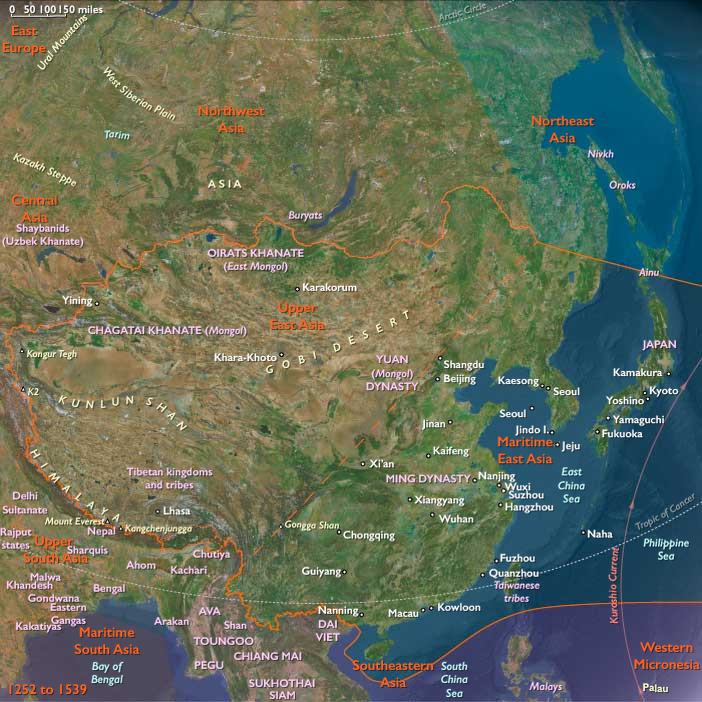
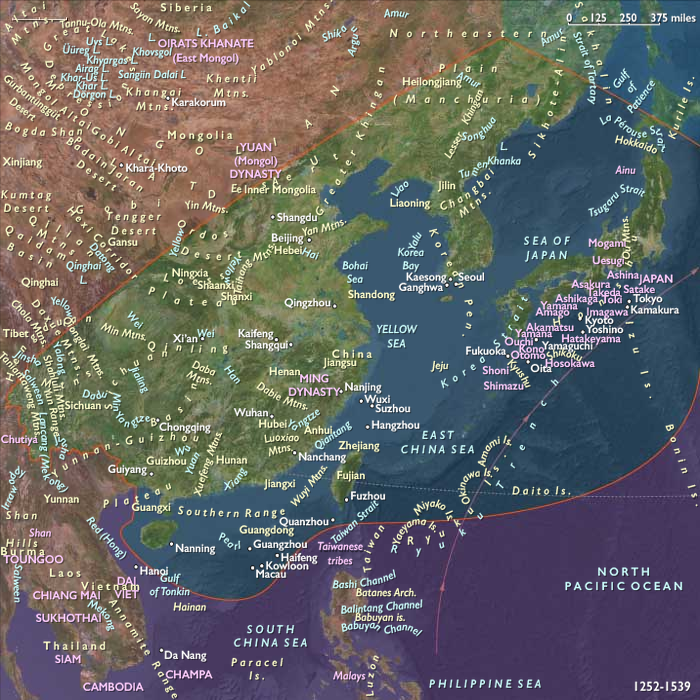
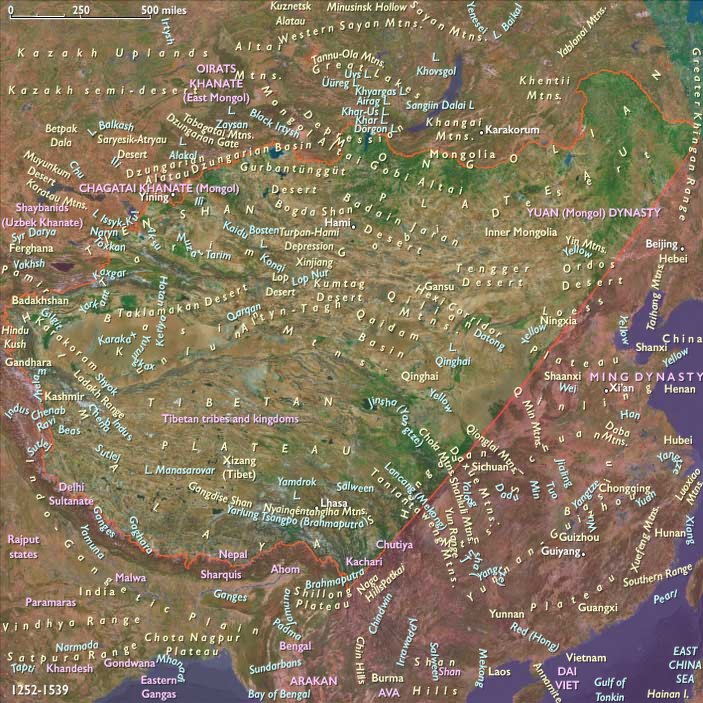
East Asia in this age spanned two great spheres.
Lower East Asia encompassed southern and eastern China, Taiwan, the Korean Peninsula, southern Primorsky Krai, the Japanese islands of Kyushu, Shikoku, Honshu, southwestern Hokkaidō, and the Ryukyu and Izu chains—an arc linking continental empires to peninsular and insular realms.
Upper East Asia reached across Mongolia, Tibet, Xinjiang, Qinghai, Gansu, Ningxia, Inner Mongolia, and the northwestern highlands of China, blending alpine pastures, deserts, and irrigated oases.
Together these zones framed one of the world’s largest and most interconnected cultural systems—anchored by the Ming Empire, the Joseon Dynasty, the Ashikaga Shogunate, and the monastic strongholds of the Tibetan Plateau.
Climate & Environmental Shifts
The Little Ice Age deepened temperature contrasts and heightened climate stress:
-
North China faced droughts and shortened growing seasons; famine and migration tested Ming governance.
-
South China remained humid, sustaining multiple rice harvests.
-
Korea endured harsh winters that curtailed rice farming in the north.
-
Japan’s variable climate worsened food shortages, fueling unrest under the Ashikaga.
-
On the steppe, advancing cold shrank grazing lands, driving nomadic competition and raids on settled borders.
-
Across the Tibetan Plateau and Xinjiang, fluctuating rainfall alternated between fertile and famine years.
Subsistence & Settlement
-
China (Ming): Wet-rice and dry-grain farming expanded; the Grand Canal transported southern grain to Beijing. Urban centers such as Nanjing, Hangzhou, and Suzhou thrived as hubs of production and commerce.
-
Korea (Joseon): Rice and millet underpinned rural life; Confucian hierarchies structured agrarian estates; Hanyang (Seoul) rose as a Confucian capital.
-
Japan: Fragmented daimyō domains competed amid the Ashikaga decline; castle towns and rice taxation sustained regional militaries.
-
Ryukyu Kingdom: Cultivated rice terraces and served as a vital maritime broker between China, Japan, and Southeast Asia.
-
Taiwan: Indigenous Austronesian communities cultivated millet, taro, and yams; coastal fishing and forest gathering dominated.
-
Steppe and Plateau: Mongol herders raised horses, sheep, and camels; Tibetan monasteries managed vast barley estates and yak herds; Xinjiang oases farmed wheat, grapes, and melons.
Technology & Material Culture
The early modern transformation began here:
-
Ming China: Mastery of porcelain at Jingdezhen, silk weaving, metalwork, and woodblock printing; the early 15th century saw the Zheng He expeditions—armadas that showcased imperial technology and reach.
-
Korea: Movable metal type and celadon ceramics flourished; Confucian academies multiplied.
-
Japan: Fortifications, swords, and gardens exemplified martial and aesthetic refinement; Zen art and Noh theater flourished.
-
Ryukyu: Gusuku fortresses and imported Chinese ceramics embodied hybrid artistry.
-
Steppe & Frontier: Saddles, stirrups, and composite bows remained vital; oasis artisans crafted glazed tiles and Qur’anic manuscripts; Tibetan monasteries refined sculpture and thangka painting.
Movement & Interaction Corridors
The 15th and early 16th centuries saw renewed connectivity:
-
Silk Road revival: Caravans through Gansu and Xinjiang linked China, Samarkand, and Persia.
-
Ming maritime order: Tributary missions from Korea, Japan, Ryukyu, Southeast Asia, and beyond sustained Sinocentric diplomacy.
-
Korean missions: Embassies brought Confucian texts and scholars to Beijing.
-
Japanese trade: Official exchanges coexisted with outlawed piracy (wokou).
-
Ryukyu networks: The kingdom mediated goods and ideas between Fujian, Kyushu, and Malacca.
-
Steppe corridors: Mongol confederations pressed southward; Ming fortifications extended along the Great Wall.
-
Tibetan pilgrim routes: Linked monasteries to Nepal, Kashmir, and Ming China.
-
Islamic routes: Merchants from Kashgar and Turpan connected to Sufi networks in Bukhara and Samarkand.
Cultural & Symbolic Expressions
East Asia’s spiritual and artistic vibrancy reached new heights:
-
China: Neo-Confucianism shaped Ming statecraft; Yongle’s encyclopedias and Beijing’s Forbidden Citysymbolized centralized power; literati painting and calligraphy flourished.
-
Korea: The Joseon state codified Confucian ritual and law; scholar-officials (yangban) cultivated verse, painting, and historical writing.
-
Japan: Zen-inspired minimalism defined architecture, tea ceremony (chanoyu), and garden design; bushidōethics blended loyalty and artistry.
-
Ryukyu: Ancestor worship and maritime rites blended Shinto, Chinese, and Austronesian traditions.
-
Tibet: The Gelugpa ascendance culminated in the early authority of the Dalai Lamas, whose monasteries—Drepung, Sera, Tashilhunpo—became pillars of scholarship and economy.
-
Xinjiang: Islam infused architecture and civic life; Kashgar and Khotan glowed with mosques, madrasas, and shrines.
Environmental Adaptation & Resilience
-
Agrarian China: Multi-crop rotations and flood-control embankments mitigated drought and famine.
-
Joseon Korea: Terraced paddies and winter granaries stabilized rice supply.
-
Japan: Diversified coastal fisheries and storage systems cushioned war-induced shortages.
-
Ryukyu: Tribute imports offset cyclone losses.
-
Steppe & Plateau: Herd diversification and monastic redistribution ensured survival through climatic downturns.
-
Xinjiang & Gansu: Qanat irrigation and caravan supply lines provided grain to oasis cities.
Technology & Power Shifts (Conflict Dynamics)
-
Ming consolidation: Centralized administration and border defenses curbed Mongol incursions.
-
Joseon orthodoxy: Strengthened bureaucracy and moral governance.
-
Ashikaga decline: Civil wars eroded unity, paving the way for Japan’s Sengoku era.
-
Mongol confederations: Fragmented yet resilient, pressuring China’s frontier garrisons.
-
Tibetan monasteries: Emerged as dual spiritual–temporal powers.
-
Islamic Central Asia: Sufi orders bridged frontier communities, resisting imperial encroachment.
Transition (to 1539 CE)
By 1539, East Asia stood at a pivotal equilibrium.
Ming China had restored imperial order and projected power from the Great Wall to the Indian Ocean.
Joseon Korea perfected its Confucian bureaucracy.
Japan entered its century of warring states.
The Ryukyu Kingdom flourished as a maritime hinge, and the Tibetan monasteries presided over a highland renaissance.
The steppe and oasis worlds remained contested but vibrant, while European exploration had not yet breached the Pacific Rim.
This was an age of internal consolidation, artistic efflorescence, and ecological adaptation—a world balancing empire and autonomy, order and upheaval, on the eve of global connection.
Groups
Topics
Subjects
Regions