
South Central Europe (1396–1539 CE): Alpine Confederacies, …
Years: 1396 - 1539
South Central Europe (1396–1539 CE): Alpine Confederacies, Habsburg Frontiers, and Reformation Currents
Geographic & Environmental Context
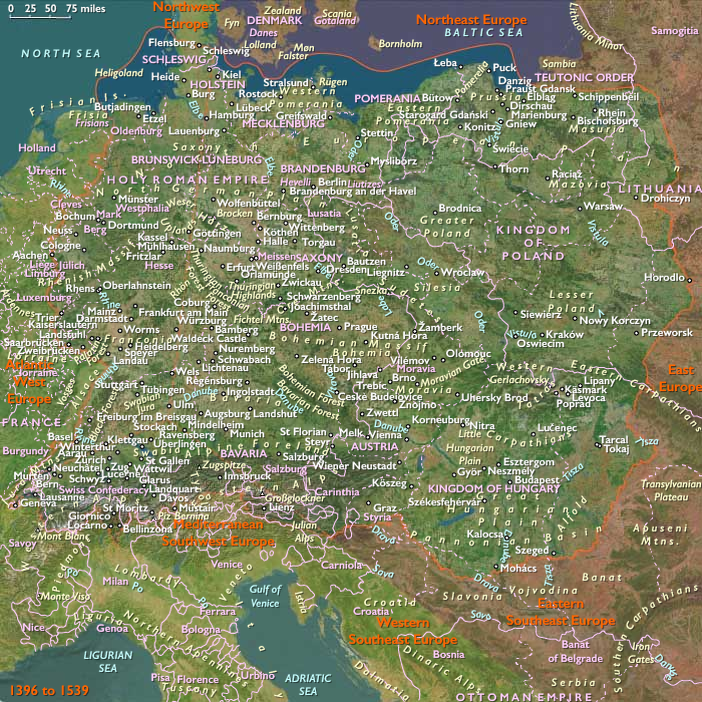
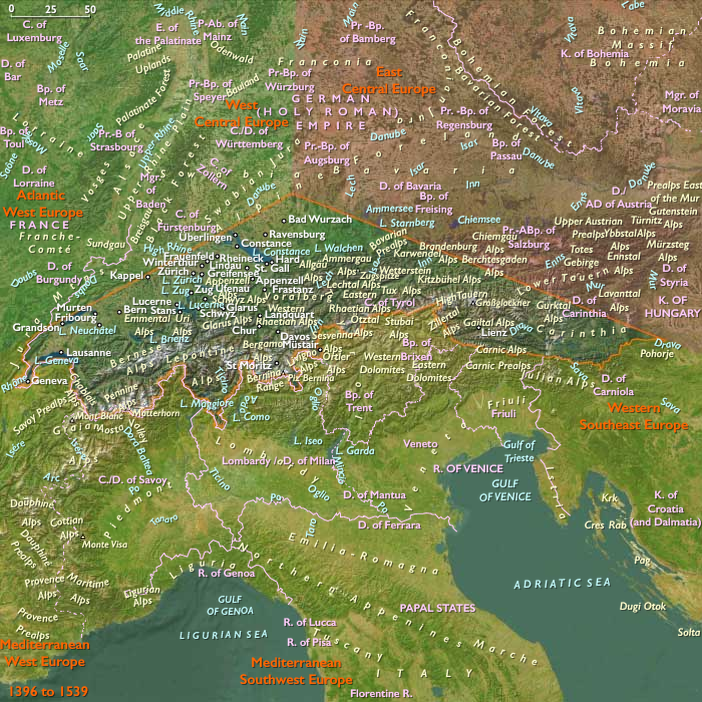
The subregion of South Central Europe includes western and southern Austria (except Salzburg), Liechtenstein, extreme southwestern Germany, and most of Switzerland (including Geneva and Zurich but excluding Basel and the northern Jura). Anchors included the Tyrolean and Styrian Alps, the Rhine headwaters around Chur, the Swiss plateau cities of Zurich, Bern, and Geneva, the Bernese Oberland and Valais highlands, and the Alpine passes of St. Gotthard, Brenner, and Arlberg. These zones linked Italy to Germany and France, funnelling merchants, pilgrims, and armies across snowbound corridors.
Climate & Environmental Shifts
The Little Ice Age deepened alpine challenges:
-
High Alps: Glaciers advanced, threatening upland pastures and settlements in Valais and Grisons.
-
Swiss plateau & Tyrolean valleys: Shorter growing seasons limited wheat; rye, barley, and oats dominated.
-
Geneva basin and Ticino valleys: Grapes and chestnuts thrived, though yields dipped in cold decades.
-
Pastoral uplands: Transhumance sustained dairy, wool, and hides despite winter stress.
Subsistence & Settlement
-
Villages: Practiced mixed farming of rye, oats, beans, flax, and orchards; cattle herding for milk and cheese anchored upland economies.
-
Transhumance: Seasonal migrations between valley farms and alpine meadows shaped life in Switzerland, Tyrol, and Grisons.
-
Towns: Zurich, Bern, Lucerne, and Geneva thrived as markets and political centers; Innsbruck (Tyrol) linked Alpine mining to wider trade.
-
Lake Geneva & Zurich basins: Supported viticulture, trade fairs, and craft production.
Technology & Material Culture
-
Agriculture: Heavy plows and scythes; communal granaries; watermills in valleys.
-
Mining & metallurgy: Silver and copper mines in Tyrol enriched the Habsburgs; ironworking supported tools and weapons.
-
Crafts: Swiss textiles, watchmaking beginnings, leather and woodwork.
-
Architecture: Gothic churches (Zurich Grossmünster, Geneva St. Pierre), alpine castles, civic halls in Swiss towns.
-
Printing: Presses in Zurich and Geneva (early 16th century) spread humanist and reformist texts.
Movement & Interaction Corridors
-
Alpine passes: Brenner, St. Gotthard, and Simplon carried Venetian silks and spices north, German furs and silver south.
-
Rhine headwaters & upper Danube: Moved timber, grain, and wine into broader markets.
-
Lake Geneva: A hub for trade fairs drawing French, Italian, and German merchants.
-
Pilgrimage routes: To Einsiedeln Abbey, Chur, and alpine shrines; also transalpine routes to Rome.
Cultural & Symbolic Expressions
-
Catholic piety: Monasteries, abbeys, and feast cycles structured rural and urban rhythms.
-
Swiss Confederation: Gained cohesion after victories at Morgarten (1315), Sempach (1386), and Näfels (1388); cantonal leagues expanded through the 15th century.
-
Burgundian Wars (1470s): Swiss defeated Charles the Bold, solidifying confederate military prestige.
-
Humanism: Geneva and Zurich became hubs of learning; Erasmus resided in Swiss lands, and reformist writings spread from presses.
-
Reformation: Ulrich Zwingli launched reform in Zurich (1519), spurring iconoclasm and liturgical change; Geneva embraced reform under John Calvin by the late 1530s.
Environmental Adaptation & Resilience
-
Alpine households: Stockpiled hay and grain; practiced intercropping to stabilize yields.
-
Dairy cooperatives: Produced cheese for storage and trade, buffering poor harvests.
-
Communal labor: Built terraces, repaired flood dikes, and maintained alpine pastures.
-
Upland resilience: Relied on diverse resources—forests, hunting, and river fishing—in lean years.
Technology & Power Shifts (Conflict Dynamics)
-
Swiss Confederation vs. Habsburgs: Defeated Habsburg attempts at control; secured autonomy after Swabian War (1499).
-
Urban-rural tensions: Town guilds and peasant communes clashed over taxes and pastures.
-
Religious wars: Swiss cantons divided between Catholic and Protestant; Zwingli died in battle at Kappel (1531). Geneva became a center for Calvinist exiles and doctrine.
-
Habsburg Austria: Consolidated Tyrol and Styria with mining wealth, funding imperial ambitions; Vienna and Innsbruck fortified against Ottoman threats advancing up the Danube.
Transition
By 1539 CE, South Central Europe had become a region of contrasts: Swiss cantons prided themselves on military independence but fractured along confessional lines; Geneva emerged as a Protestant stronghold; Zurich was scarred by religious wars. In Austria and Tyrol, the Habsburgs consolidated mining wealth and fortified the Danube frontier. Alpine villages adapted to harsher climate with resilient agro-pastoralism, while alpine passes tied Italy and Germany in a web of trade, pilgrimage, and war.
People
Groups
- Christianity, Chalcedonian
- German, or Ottonian (Roman) Empire
- Italy, Kingdom of (Holy Roman Empire)
- Holy Roman Empire
- Habsburg, House of
- Austria, Archduchy of
- Swiss Confederacy, Old (Swiss Confederation)
- Swiss mercenaries
- League of God's House
- Gray League
- League of the Ten Jurisdictions
Topics
- Growth of the Old Swiss Confederacy
- Burgundian Wars
- Burgundian Wars
- Swabian War
- Marignano, Battle of
- Protestant Reformation
- Kappel War, First War of
- Kappel, Second War of
Commodoties
- Fish and game
- Weapons
- Hides and feathers
- Domestic animals
- Grains and produce
- Strategic metals
- Salt
- Beer, wine, and spirits
- Lumber
Subjects
Regions
Subregions
Related Events
Showing 10 events out of 43406 total
Years: 1396 - 1539
People
Groups
- Christianity, Chalcedonian
- German, or Ottonian (Roman) Empire
- Italy, Kingdom of (Holy Roman Empire)
- Holy Roman Empire
- Habsburg, House of
- Austria, Archduchy of
- Swiss Confederacy, Old (Swiss Confederation)
- Swiss mercenaries
- League of God's House
- Gray League
- League of the Ten Jurisdictions
Topics
- Growth of the Old Swiss Confederacy
- Burgundian Wars
- Burgundian Wars
- Swabian War
- Marignano, Battle of
- Protestant Reformation
- Kappel War, First War of
- Kappel, Second War of
Commodoties
- Fish and game
- Weapons
- Hides and feathers
- Domestic animals
- Grains and produce
- Strategic metals
- Salt
- Beer, wine, and spirits
- Lumber
Subjects
Regions
Subregions