
West Polynesia (1396–1539 CE): Voyaging Chiefdoms in …
Years: 1396 - 1539
West Polynesia (1396–1539 CE): Voyaging Chiefdoms in an Oceanic Constellation
Geographic & Environmental Context
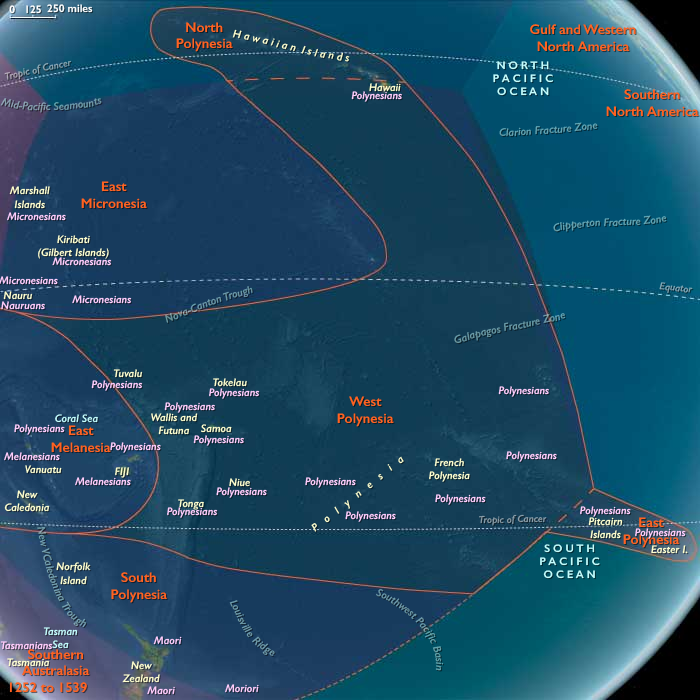
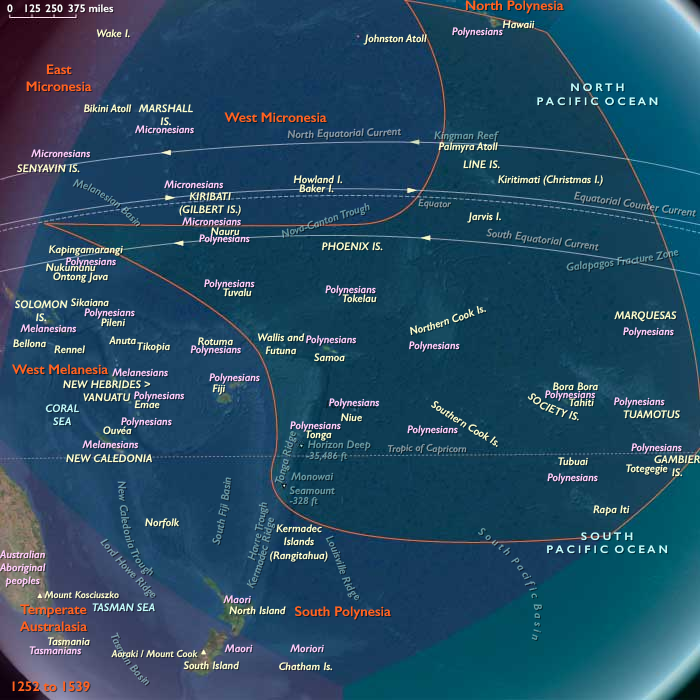
The subregion of West Polynesia includes the Big Island of Hawaii, Samoa, Tonga, Tuvalu, Tokelau, the Cook Islands, and French Polynesia. This vast expanse of the Pacific encompassed volcanic high islands with fertile soils (Hawai‘i, Samoa, Tonga), low-lying atolls (Tuvalu, Tokelau), and the scattered archipelagos of the Cook and French Polynesian chains, where coral reefs and lagoons framed ocean-facing coasts. Rugged mountains, fertile valleys, and reef-fringed shorelines created a mosaic of ecological niches tied together by open-sea voyaging routes.
Climate & Environmental Shifts
This age unfolded during the early centuries of the Little Ice Age, when modest global cooling affected rainfall and sea-surface temperatures. In West Polynesia, conditions translated into slightly more variable rainfall and occasional prolonged droughts, especially on atolls with thin soils and no freshwater streams. ENSO (El Niño–Southern Oscillation) cycles periodically intensified storms, disrupting agriculture and altering fish stocks. Despite these fluctuations, the overall climate remained warm and suitable for cultivation and seafaring.
Subsistence & Settlement
By this period, societies across West Polynesia were well established and populous. Settlements clustered along fertile valleys, reef-protected bays, and coastal plains. Taro terraces, irrigated in Hawai‘i and Samoa, sustained dense populations, while breadfruit groves, banana stands, and yam fields provided staples on volcanic islands. Atolls depended on coconut palms, pandanus, breadfruit, and lagoon fisheries. Pigs, chickens, and dogs were widespread, integrated into feasting economies and ritual life. Canoe-fishing sustained communities across reef and pelagic zones, targeting tuna, bonito, and reef fish with hook-and-line, nets, and trolling gear.
Technology & Material Culture
This was the height of Polynesian seafaring and technological adaptation. Double-hulled canoes with woven sails carried chiefs, priests, and explorers across vast distances, maintaining networks among scattered archipelagos. Houses were built from timber, pandanus thatch, and basalt stone, while monumental architecture—temples (marae/heiau)—marked religious and political centers, particularly in the Societies, Cooks, and Hawai‘i. Stone adzes, shell ornaments, barkcloth textiles, and finely worked wooden implements displayed skilled craftsmanship. Ritual and political authority was reinforced through monumental constructions and the symbolic power of material goods.
Movement & Interaction Corridors
West Polynesia was knit together by ocean corridors. Navigators used stars, swells, cloud formations, and bird flights to guide voyaging canoes between Samoa, Tonga, Fiji, and further east into the Cooks and French Polynesia. These routes sustained tribute, marriage alliances, and religious exchange. The Tongan maritime chiefdom maintained networks of influence stretching into Samoa and Fiji. Hawaiian voyaging also linked the islands internally, reinforcing political unification trends. Though external contact with Europeans had not yet begun, Polynesians were active shapers of their own maritime world.
Cultural & Symbolic Expressions
This age was marked by the flourishing of chiefly ritual systems and religious traditions. Sacred spaces—marae and heiau—were centers of worship and political authority. Genealogies connected ruling chiefs to gods and ancestors, legitimizing hierarchy and tribute systems. Ceremonial exchanges of food, barkcloth, and ornaments reinforced kinship ties across archipelagos. Oral traditions—chants, genealogies, mythic histories—preserved collective memory and cosmic order. Symbols of authority, such as feathered cloaks in Hawai‘i or kava rituals in Tonga and Samoa, expressed both spiritual and political power.
Environmental Adaptation & Resilience
Communities displayed remarkable resilience to environmental variability. On atolls, water scarcity was managed by rainwater collection and coconut-based subsistence systems. Diversified agriculture on high islands buffered against crop failures; irrigation systems in Hawai‘i and Samoa ensured food security during droughts. Social systems of redistribution—tribute, feasting, and ceremonial exchange—spread risk across lineages and islands. Voyaging itself was a form of resilience, connecting resource-poor islands to richer neighbors.
Transition
By 1539 CE, West Polynesia stood as a constellation of powerful, interconnected chiefdoms. Monumental architecture, sophisticated agriculture, and advanced voyaging maintained social and ecological balance across a dispersed maritime world. Though European contact was still decades away, the structures of resilience, ritual, and inter-island exchange ensured that West Polynesia was already a dynamic and integrated system at the heart of the Pacific.
Groups
- Hawaiʻi
- Fiji
- Polynesians
- Samoan, or Navigators Islands
- Tahitians
- Ellice Islands/Tuvalu
- Cook Islanders
- Hawaiians, Native
- Marquesas Islands
- Tokelau
- Tonga, Kingdom of
Topics
Commodoties
- Rocks, sand, and gravel
- Fish and game
- Hides and feathers
- Grains and produce
- Fibers
- Ceramics
- Salt
- Lumber
Subjects
Regions
Subregions
Related Events
Showing 10 events out of 43406 total
Years: 1396 - 1539
Groups
- Hawaiʻi
- Fiji
- Polynesians
- Samoan, or Navigators Islands
- Tahitians
- Ellice Islands/Tuvalu
- Cook Islanders
- Hawaiians, Native
- Marquesas Islands
- Tokelau
- Tonga, Kingdom of
Topics
Commodoties
- Rocks, sand, and gravel
- Fish and game
- Hides and feathers
- Grains and produce
- Fibers
- Ceramics
- Salt
- Lumber
Subjects
Regions
Subregions