
Western Southeast Europe (1540–1683 CE): Ottoman Heartlands, …
Years: 1540 - 1683
Western Southeast Europe (1540–1683 CE): Ottoman Heartlands, Venetian Coasts, and Seeds of Resistance
Geography & Environmental Context
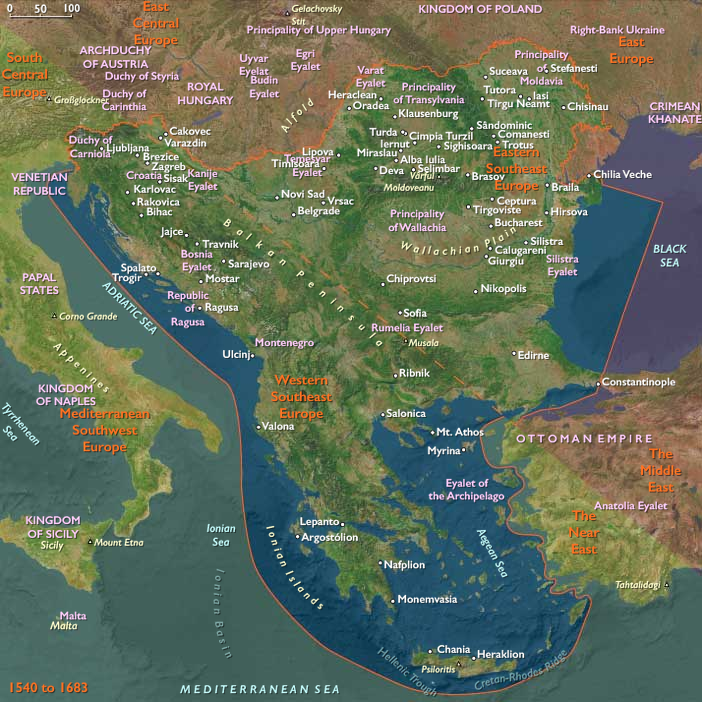
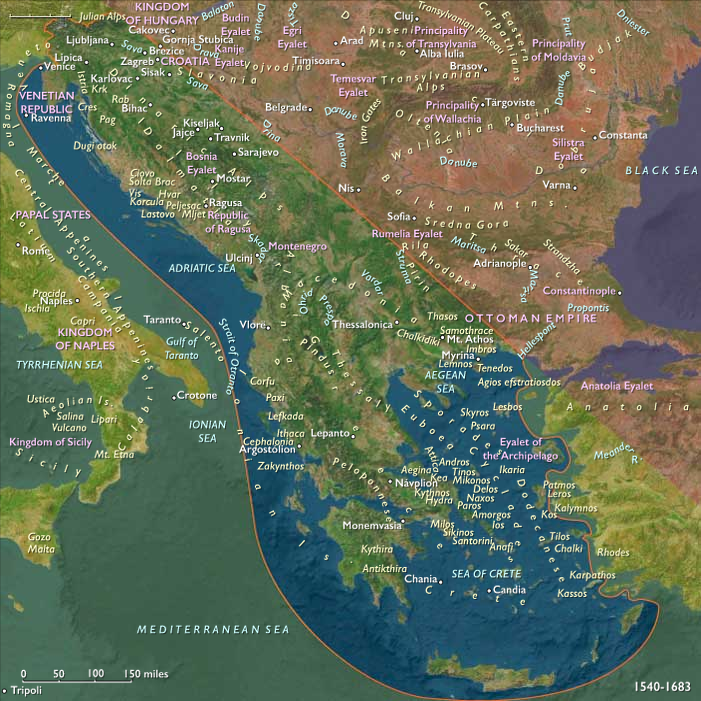
Western Southeast Europe comprises Greece, Albania, Montenegro, North Macedonia, Kosovo, most of Bosnia and Herzegovina, southwestern Serbia, most of Croatia, and Slovenia. Anchors include the Peloponnese, the Pindus and Dinaric Alps, the Vardar/Axios, Neretva, and Drina valleys, the Dalmatian coast with its karst islands, and the Aegean and Ionian archipelagos. Major towns included Athens, Thessaloniki, Sarajevo, Dubrovnik (Ragusa), Split, Ljubljana, Zagreb, Skopje, and Tirana. This subregion bridged Ottoman-controlled Balkan interiors with Venetian and Habsburg coastal and upland frontiers.
Climate & Environmental Shifts
The Little Ice Age marked the period with cooler winters and irregular rains. Grain harvests faltered in upland valleys, and floods and droughts alternated in river basins such as the Sava–Drina. Earthquakes struck repeatedly in the Ionian islands and Aegean arc. Malaria haunted lowlands like the Axios and coastal marshes, while transhumant herding buffered mountain societies against poor harvests.
Subsistence & Settlement
-
Agriculture:
-
In Greece and Albania, olives, vines, figs, and cereals dominated; terraced hillsides supported vines and gardens.
-
Bosnia, Montenegro, and Macedonia produced wheat, barley, maize (introduced gradually after the 16th century), and tobacco.
-
Coastal Dalmatia relied on vines, olives, and fishing due to limited farmland.
-
-
Pastoralism: Transhumance across the Dinaric and Pindus ranges sustained sheep and goats.
-
Urban life: Athens was a modest Ottoman town; Thessaloniki flourished as a port; Sarajevo grew as an Ottoman administrative hub; Dubrovnik (Ragusa) remained an independent maritime republic balancing between empires; Ljubljana and Zagreb sat on the Habsburg frontier.
Technology & Material Culture
-
Agricultural tools: Wooden plows, sickles, and irrigation channels persisted, while maize’s spread began to alter field rotations.
-
Architecture: Mosques, bridges, and caravanserais were built in Sarajevo, Skopje, and Thessaloniki under Ottoman patronage.
-
Venetian Dalmatia: Stone forts, harbors, and Renaissance palazzi adorned coastal cities like Split and Zadar.
-
Material culture: Wool, leather, and metalwork crafts thrived in upland towns; fine embroidery and carpets reflected Ottoman influence.
Movement & Interaction Corridors
-
Ottoman arteries: Caravans and armies moved along the Vardar–Morava–Danube corridor, binding Thessaloniki to Belgrade and beyond.
-
Venetian routes: Maritime trade linked Dalmatian ports and Ionian islands with Venice and the wider Mediterranean.
-
Pilgrimages: Orthodox circuits to Mount Athos, Catholic journeys to Dalmatian shrines, and Muslim pilgrimages within the Balkans interlaced faith and mobility.
-
Border wars: The Habsburg–Ottoman frontier in Croatia and Slovenia hardened, with forts and military marches buffering empires.
Cultural & Symbolic Expressions
-
Religion: Orthodoxy dominated Greece, Macedonia, and Serbia; Catholicism in Dalmatia, Slovenia, and Croatia; Islam spread in Bosnia, Kosovo, and parts of Albania under Ottoman rule. Religious pluralism became a defining feature.
-
Education & literature: Orthodox monasteries preserved texts in Greek and Slavic; Ottoman schools spread Islamic learning; Dubrovnik fostered a Renaissance humanist circle.
-
Art & ritual: Ottoman mosques, Orthodox monasteries, Catholic baroque churches, and Venetian palazzi coexisted. Epic songs and oral traditions celebrated clan heroes, resistance, and saints.
Environmental Adaptation & Resilience
-
Terracing & irrigation: Sustained olives, vines, and citrus on rugged slopes.
-
Transhumance: Seasonal herding across mountains stabilized dairy and meat supply.
-
Diversification: Fishing, viticulture, and craft industries buffered rural economies.
-
Community institutions: Guilds, monasteries, and village assemblies managed relief during poor harvests or plague years.
Political & Military Shocks
-
Ottoman consolidation: The region was largely Ottoman-controlled, with Bosnia, Albania, Macedonia, and Greece firmly in imperial structures.
-
Venetian–Ottoman rivalry: Venice held Dalmatia, the Ionian Islands, and coastal forts, frequently clashing with Ottoman fleets.
-
Habsburg frontier: Military marches in Croatia and Slovenia saw constant skirmishes.
-
Local revolts: Montenegro’s clans resisted Ottoman encroachment; Maniots in southern Greece and highland Albanians maintained semi-autonomy.
-
Siege of Candia (1648–1669): Prolonged Ottoman–Venetian struggle over Crete reverberated in Western Southeast Europe.
-
Ottoman advance toward Vienna (1683): Armies staged through Balkan corridors, culminating in the failed siege that marked a turning point in Ottoman fortunes.
Transition
Between 1540 and 1683, Western Southeast Europe remained a contested imperial frontier. Ottoman administration, Venetian coastal presence, and Habsburg defenses shaped daily life. Agricultural terraces, herding, and vineyards supported diverse communities, while mosques, monasteries, and palaces embodied overlapping sovereignties. Resistance simmered in Montenegro, Mani, and among Dalmatian clans. By 1683, the Ottoman failure at Vienna foreshadowed a century of imperial contraction and the gradual re-emergence of Balkan independence movements.
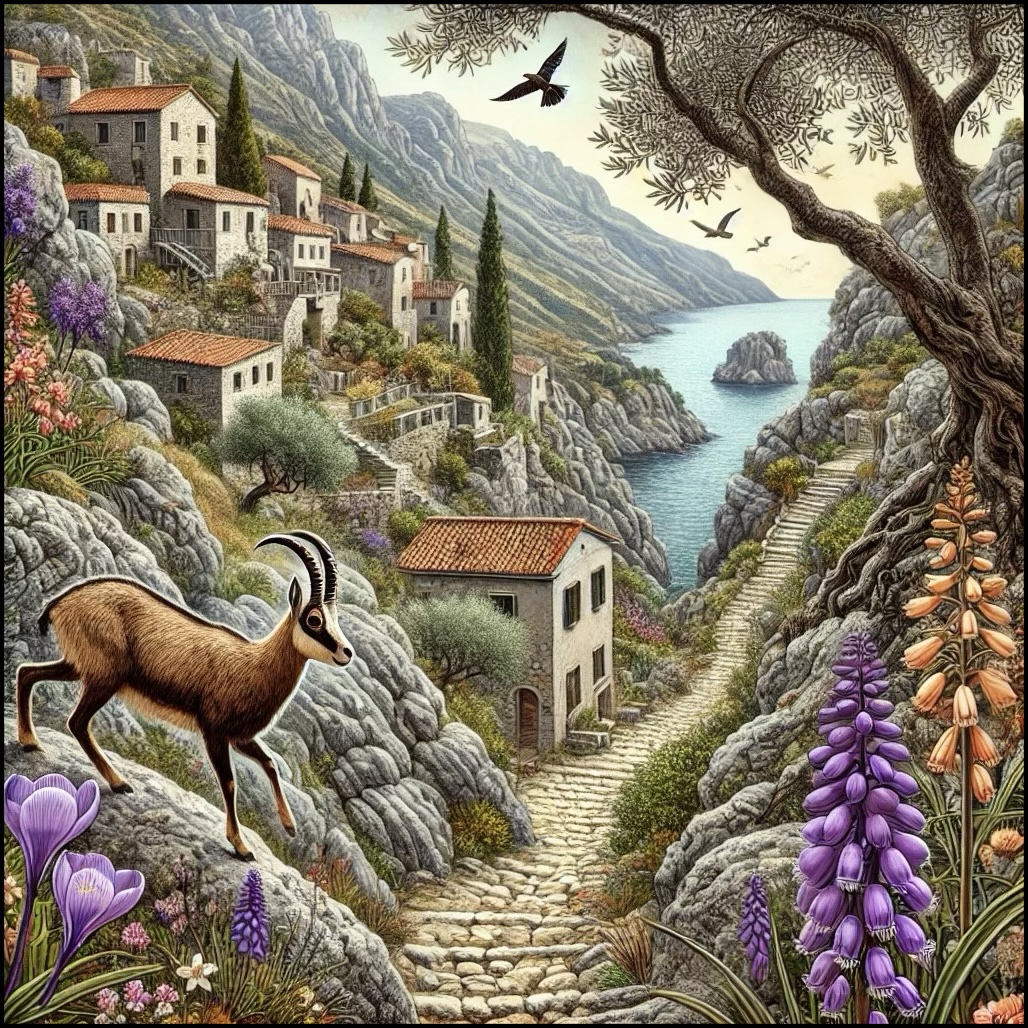
Western Southeast Europe (with civilization) ©2024-25 Electric Prism, Inc. All rights reserved.
Groups
- Slavs, South
- Greeks, Medieval (Byzantines)
- Venice, Duchy of
- Croats (South Slavs)
- Serbs (South Slavs)
- Croatia, Kingdom of
- March of Carniola
- Habsburg, House of
- Christians, Eastern Orthodox
- Christians, Roman Catholic
- Dalmatia region
- Croatia, Kingdom of
- Austria, Archduchy of
- Styria, Duchy of
- Athens, Duchy of
- Epirus, Despotate of
- Serbia, Kingdom of
- Hungary, Kingdom of
- Achaea, Principality of
- Achaea, Principality of
- Ottoman Emirate
- Catalan Company of the East, Grand (officially the Company of the Army of the Franks in Romania, sometimes called the Grand Company and widely known as the Catalan Company
- Ottoman Emirate
- Serbian Empire
- Ottoman Empire
- Epirus, Despotate of
- Ragusa, Republic of
- Carniola, Duchy of
- Humska zemlja (Hum)
Topics
- Little Ice Age, Warm Phase I
- Little Ice Age (LIA)
- Black Death, or Great Plague
- Serbian Empire, fall of the
- Kosovo, Battle of
Commodoties
- Glass
- Domestic animals
- Oils, gums, resins, and waxes
- Grains and produce
- Textiles
- Ceramics
- Strategic metals
- Salt
- Beer, wine, and spirits
- Manufactured goods
- Money
- Aroma compounds
Subjects
Regions
Subregions
Related Events
Showing 10 events out of 37475 total
Years: 1540 - 1683
Western Southeast Europe (with civilization) ©2024-25 Electric Prism, Inc. All rights reserved.
Groups
- Slavs, South
- Greeks, Medieval (Byzantines)
- Venice, Duchy of
- Croats (South Slavs)
- Serbs (South Slavs)
- Croatia, Kingdom of
- March of Carniola
- Habsburg, House of
- Christians, Eastern Orthodox
- Christians, Roman Catholic
- Dalmatia region
- Croatia, Kingdom of
- Austria, Archduchy of
- Styria, Duchy of
- Athens, Duchy of
- Epirus, Despotate of
- Serbia, Kingdom of
- Hungary, Kingdom of
- Achaea, Principality of
- Achaea, Principality of
- Ottoman Emirate
- Catalan Company of the East, Grand (officially the Company of the Army of the Franks in Romania, sometimes called the Grand Company and widely known as the Catalan Company
- Ottoman Emirate
- Serbian Empire
- Ottoman Empire
- Epirus, Despotate of
- Ragusa, Republic of
- Carniola, Duchy of
- Humska zemlja (Hum)
Topics
- Little Ice Age, Warm Phase I
- Little Ice Age (LIA)
- Black Death, or Great Plague
- Serbian Empire, fall of the
- Kosovo, Battle of
Commodoties
- Glass
- Domestic animals
- Oils, gums, resins, and waxes
- Grains and produce
- Textiles
- Ceramics
- Strategic metals
- Salt
- Beer, wine, and spirits
- Manufactured goods
- Money
- Aroma compounds
Subjects
Regions
Subregions