
The plate could not be loaded.
Polynesia Collapse Brief Rising Reefs, Forested Islands, and the Unpeopled Pacific. Brief ‹ 3 subregions Rising Reefs, Forested Islands, and the Unpeopled Pacific. Explore events
Rising Reefs, Forested Islands, and the Unpeopled Pacific.
Polynesia · Northern Oceania · Central Oceania · The Ends of the Earth
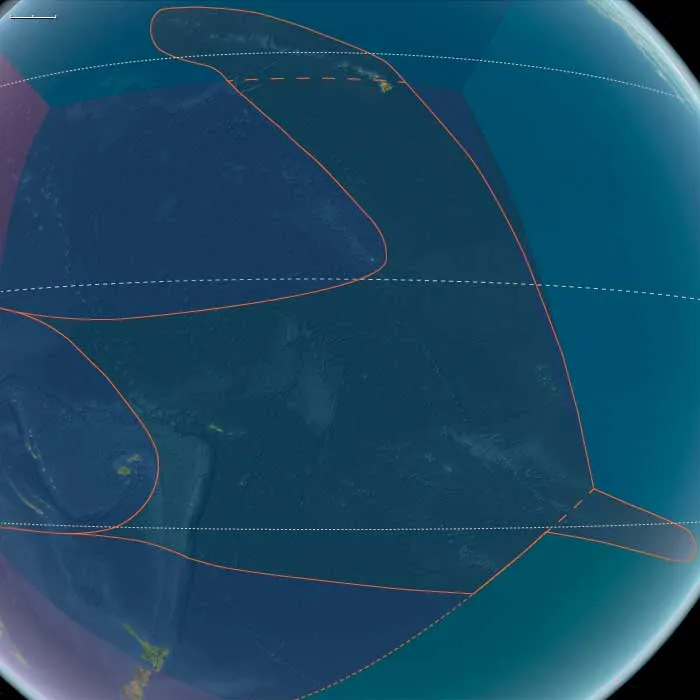
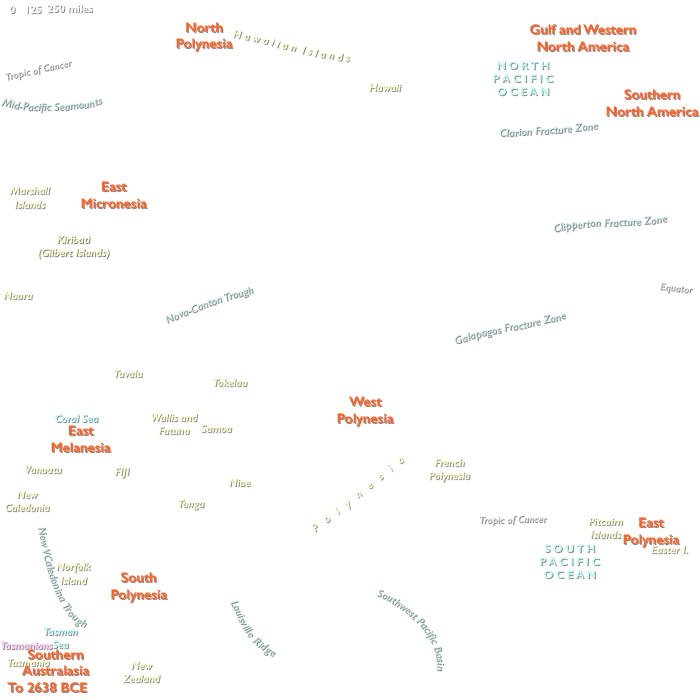
During the Early Holocene, the islands later grouped as Polynesia stretched from the Hawaiian chain across the tropical central Pacific to Rapa Nui and the Pitcairn group, and south to the northern North Island of New Zealand, the Chathams, Norfolk and the Kermadecs. No people occupied any part of this immense oceanic region. Its history unfolded entirely through rising seas, volcanic and tectonic processes, reef growth, climate and the independent development of isolated ecosystems.
Continue reading
During the Early Holocene, the islands later grouped as Polynesia stretched from the Hawaiian chain across the tropical central Pacific to Rapa Nui and the Pitcairn group, and south to the northern North Island of New Zealand, the Chathams, Norfolk and the Kermadecs. No people occupied any part of this immense oceanic region. Its history unfolded entirely through rising seas, volcanic and tectonic processes, reef growth, climate and the independent development of isolated ecosystems.
Continued postglacial sea-level rise transformed shorelines throughout the region. On high volcanic islands, marine transgression drowned low valleys and shifted beaches, reefs and estuaries while leaving mountainous interiors largely unchanged. On low atolls, even modest changes in water level could reorganize reef flats, lagoons, channels and the small areas of emergent land.
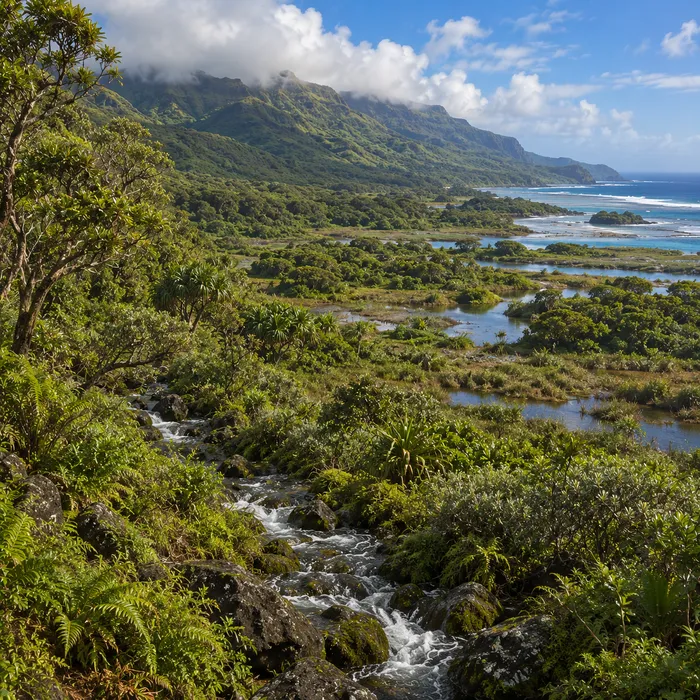
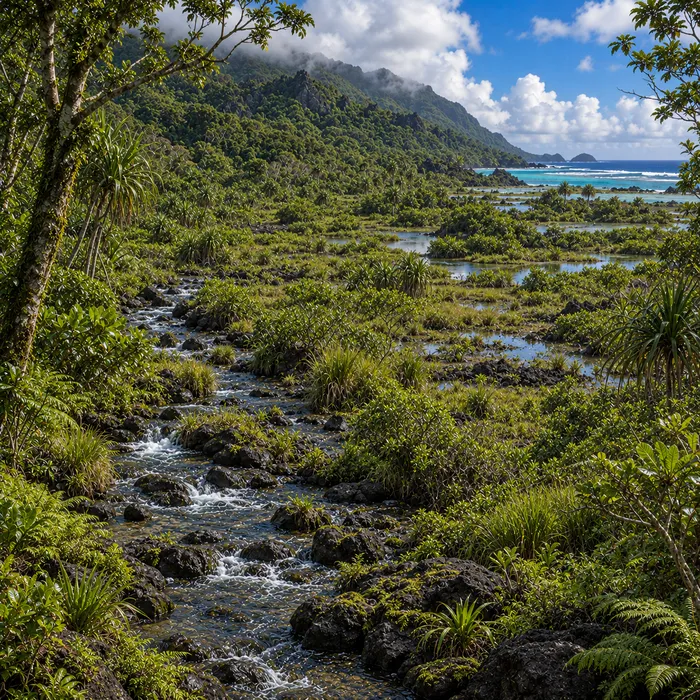
Across North Polynesia, the Hawaiian Islands supported strongly differentiated natural environments. Wet windward forests contrasted with drier leeward slopes, montane vegetation, streams and wetlands, while reefs and rocky shores supported rich marine ecosystems. Midway formed a very different low coral world of reef, sand islets and seabird habitat.
West Polynesia contained an even wider range of island forms. Hawaiʻi Island remained a geologically young volcanic landscape of great mountains and extensive lava terrain. Samoa, the Society Islands and the Marquesas combined steep volcanic relief, forested valleys and exposed coasts, while Tonga included both volcanic and limestone environments. The low reef systems of Tuvalu and Tokelau were especially sensitive to continued sea-level rise.
These tropical islands remained entirely without gardens, domestic animals or human-set fires. Forest succession, storms, landslides and volcanism produced openings naturally, while birds, insects and marine organisms continued evolving without introduced predators or competitors.
Farther south, New Zealand's northern North Island supported extensive native forest, wetlands, rivers, lakes and volcanic terrain. Moa and other endemic birds occupied these landscapes without hunting, while native predators and scavengers remained embedded within intact terrestrial ecosystems.
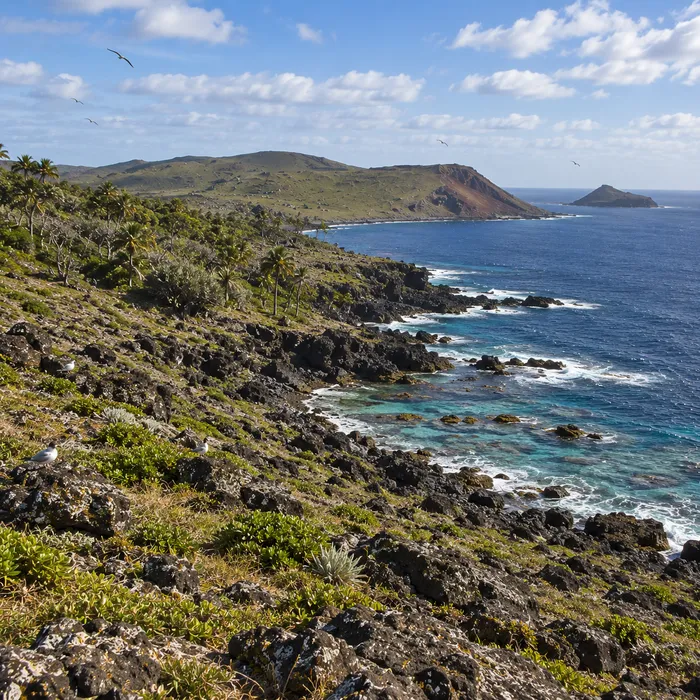
The Chatham Islands formed a cooler maritime environment of forest, shrubland, peat and exposed coast. Norfolk supported subtropical forest, while the Kermadecs combined volcanic landforms with strongly oceanic subtropical vegetation. Each remained completely beyond human settlement.
At the eastern edge of the region, Rapa Nui bore little resemblance to its later historical appearance. Palm-rich woodland and open groves mixed with Sophora, shrubs, grasses and wetland vegetation across the volcanic island. Crater basins such as Rano Raraku developed through natural sedimentation and hydrological change, without quarrying, monuments or forest clearance.
The Pitcairn group contained several sharply different island ecosystems. Forested volcanic Pitcairn contrasted with uplifted limestone Henderson, whose native forest and rich bird communities stood above extensive reef margins. Oeno and Ducie were much lower coral worlds dominated by reef, lagoon, small islets and seabird habitat.
Throughout Polynesia, the ocean connected ecosystems without connecting human communities. Trade winds, currents, storms and migrating animals moved through the region, while seeds and marine organisms dispersed naturally between some islands. There were no canoe routes, exchange networks or exploratory landfalls.
Legacy of the Age
By 6,094 BCE, Polynesia remained an entirely unpeopled oceanic region whose island landscapes were still being reshaped by Holocene sea-level rise. High volcanic islands carried mature forests and developing watersheds, low atolls adjusted continually to changing reef and lagoon conditions, southern islands supported temperate and subtropical ecosystems, and Rapa Nui remained a palm-rich volcanic landscape. No cultivation, domestic animals, settlement or deliberate burning had altered any of these environments. The defining history of the age was therefore the independent ecological development of isolated islands across the Pacific as rising seas progressively established the physical geography inherited by much later human societies.