
East Africa (1396–1539 CE) Swahili Port …
Years: 1396 - 1539
East Africa (1396–1539 CE)
Swahili Port Cities, Highland Thrones, and Riftland Kingdoms
Geography & Environmental Context
East Africa in this age spanned two intertwined spheres.
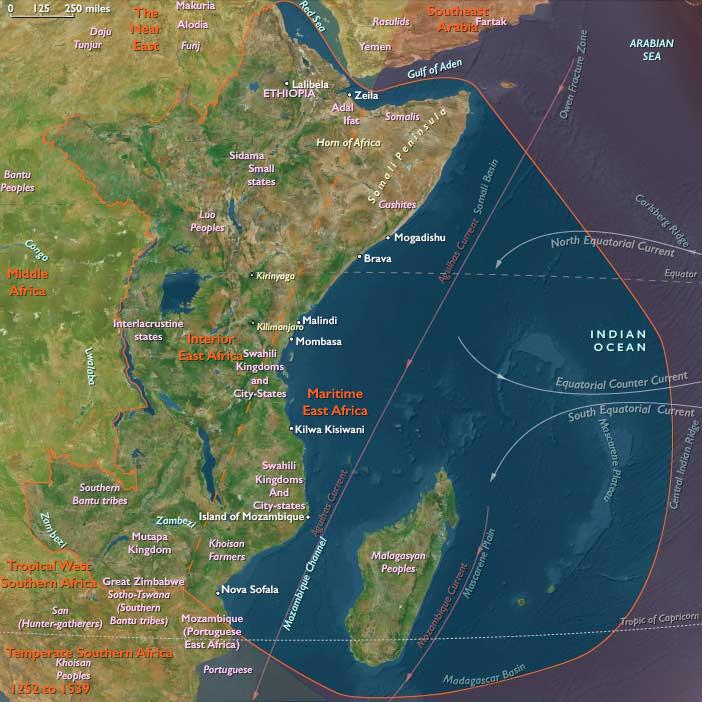
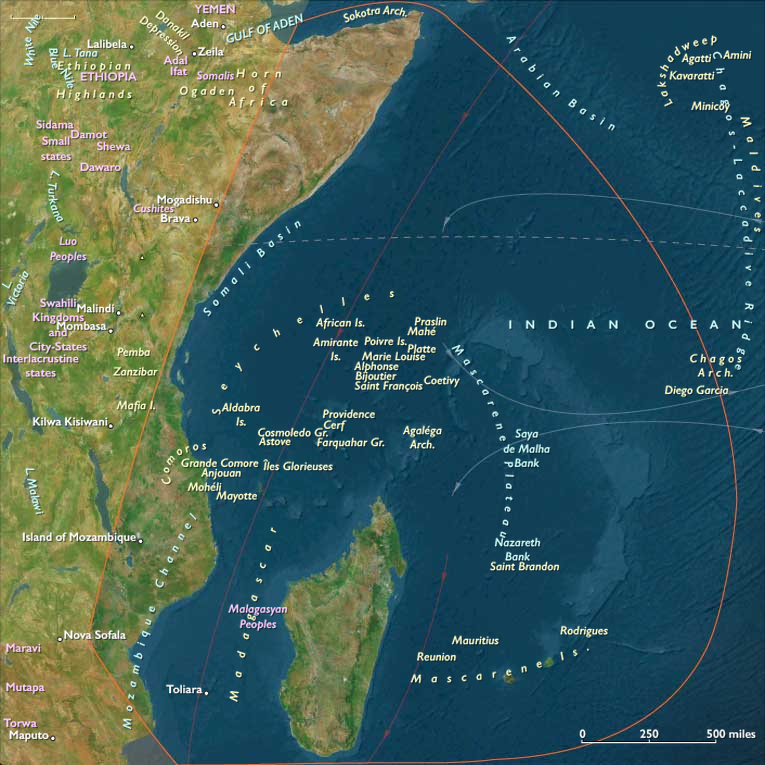
Maritime East Africa embraced Somalia, eastern Ethiopia, Kenya, Tanzania, northern Mozambique, and the islands of Zanzibar, Pemba, Comoros, Madagascar, Mauritius, and Seychelles—a coral-reef coast and island arc threaded by the monsoon routes of the Indian Ocean.
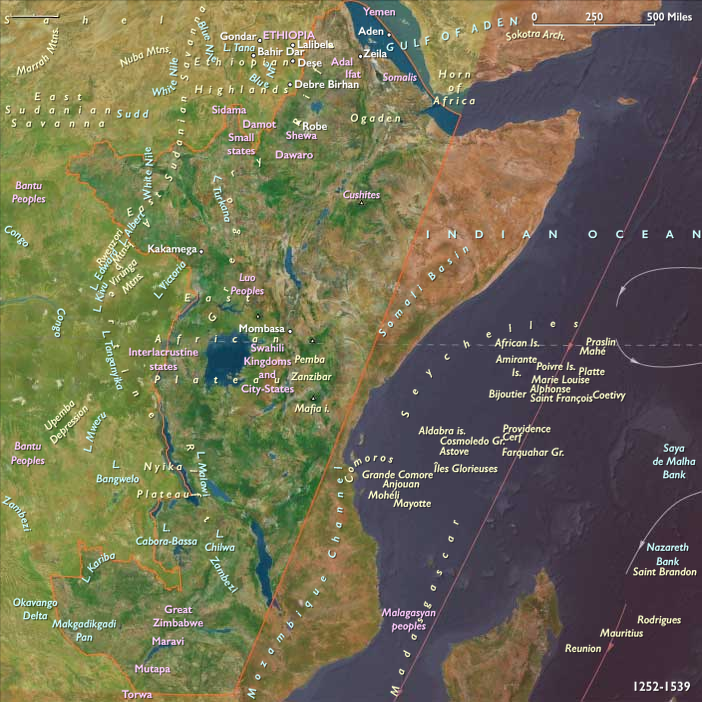
Interior East Africa extended inland across Ethiopia, South Sudan, Uganda Rwanda, Burundi, Zambia, northern Zimbabwe, northern Malawi, northwestern Mozambique, and the Rift and Great Lakes plateaus.
Together, these highlands, lakes, and coasts formed one of the world’s great eco-cultural corridors, binding Africa to Arabia, India, and Asia through river valleys and sea lanes.
Climate & Environmental Shifts
The Little Ice Age altered regional rhythms without breaking the monsoon system.
-
Coasts & islands: Alternating droughts and floods shaped farming and trade; cyclones occasionally struck Madagascar, Comoros, and Mauritius.
-
Highlands: Ethiopia experienced cooler, sometimes wetter decades, but also frost events and drought cycles.
-
Rift Lakes & savannas: Multi-year oscillations of rainfall shifted fisheries and grazing zones; miombo woodlands fluctuated between open and dense phases.
Monsoon winds—southwesterlies (May–September) and northeasterlies (November–March)—remained the heartbeat of travel and commerce.
Subsistence & Settlement
-
Swahili coast: Urban sultanates like Mogadishu, Mombasa, Kilwa, and Sofala traded gold, ivory, and slaves for Indian cottons, Persian ceramics, and Chinese porcelain; diets combined rice, millet, fish, and coconuts.
-
Islands: Zanzibar and Comoros mixed coconut and rice farming with fishing and clove cultivation; Madagascar’s east coasts and lagoons grew bananas and roots while the central highlands developed rice terraces and cattle herding. Mauritius and Seychelles remained uninhabited but rich in turtles and timber.
-
Highlands of Ethiopia: Terraced plow fields of teff, barley, and wheat supported dense Christian kingdoms; ox traction, beekeeping, and coffee gardens diversified output.
-
Great Lakes & Rift plateaus: Intensive banana–sorghum–bean gardens supported kingdoms such as Bunyoroand Buganda; cattle formed wealth and ritual core.
-
Pastoral belts: Turkana, Karamoja, and South Sudan herders followed seasonal water and pasture, exchanging milk and meat for grain.
Technology & Material Culture
-
Maritime: Coral-stone mosques and carved wooden doors in Swahili towns; dhows with lateen sails linked Africa to Arabia and India; brass, glass, and textiles marked urban wealth.
-
Agrarian: Highland terraces, irrigation canals, and ox-drawn plows; iron hoes and spears widespread.
-
Craft & architecture: Barkcloth, pottery, and ironwork in Great Lakes courts; rock-hewn sanctuaries and illuminated manuscripts in Ethiopia; megalithic tombs and zebu corrals in Madagascar.
-
Military: Matchlocks entered Ethiopia via the Red Sea in the 1520s; Portuguese cannon appeared on the coast after 1498.
Movement & Interaction Corridors
-
Caravan trails: Linked Sofala to Great Zimbabwe, Kilwa to the ivory routes of interior Tanzania, and Mogadishu to the Somali and Ethiopian highlands.
-
Sea lanes: Connected African ports to Aden, Hormuz, and Gujarat; Kilwa monopolized gold from Zimbabwe until Portuguese assault (1505).
-
Island chains: Comoros and Madagascar redistributed goods, people, and ideas; Mauritius and Seychelles served as waypoints.
-
Inland corridors: Ethiopian ridge roads joined highland capitals to Red Sea salt caravans; Great Lakes tracks tied fisheries to iron and salt zones.
-
European intrusion: Vasco da Gama reached Malindi (1498); within a decade Portuguese fleets bombarded Kilwa, Mombasa, and Sofala, building forts and enforcing cartaz pass systems.
Cultural & Symbolic Expressions
-
Swahili Islam: Mosques, madrasas, and Arabic-script poetry blended African language and Islamic faith; coral architecture and imported porcelain expressed cosmopolitan status.
-
Ethiopian Christianity: The Solomonic kings fused monarchy and church; rock-cut sanctuaries, festivals, and chronicles proclaimed divine descent.
-
Great Lakes kingship: Royal drums, regnal names, and banana groves symbolized continuity; cattle feasts and spirit mediums reinforced lineage order.
-
Madagascar & Comoros: Ancestor veneration, tomb cults, and Islam mixed; dhikr ceremonies and cattle sacrifices marked sacred time.
-
Pastoral cosmologies: Rainmaking and age-set rituals governed relations with land, herd, and sky.
Environmental Adaptation & Resilience
-
Coastal & island strategies: Mixed fishing, farming, and trade spread risk; mangroves stabilized shorelines; rice terraces in Madagascar conserved water.
-
Highland management: Crop rotation, terraces, and enclosure maintained fertility; church granaries supplied famine relief.
-
Plateau resilience: Intercropped bananas, beans, and sorghum provided year-round harvests; stock redistribution buffered loss.
-
Pastoral flexibility: Herd mobility and well management cushioned drought; exchange with cultivators ensured grain access.
-
Trade as insurance: Grain, cloth, and salt moved along caravans and sea routes, equalizing regional scarcity.
Technology & Power Shifts (Conflict Dynamics)
-
Swahili city-states: Prosperous merchant oligarchies fell to Portuguese artillery after 1505; forts at Sofala and Kilwa imposed foreign tariffs and tribute.
-
Ethiopian empire: Kings like Zara Yaqob (r. 1434–1468) strengthened monarchy and orthodoxy; frontier wars with Adal culminated in Ahmad Gragn’s invasions (1529–1530s), introducing firearms.
-
Great Lakes polities: Bunyoro and rising Buganda consolidated through tribute and iron control; Rwanda and Burundi centralized hill chieftaincies.
-
Portuguese disruption: Cannon and naval control diverted spice and gold flows, marking the end of Swahili autonomy and the start of Atlantic-Indian integration.
Transition (to 1539 CE)
By 1539 CE, East Africa stood at a global turning point.
The Swahili coast remained wealthy but partially subjugated to Portuguese forts; Ethiopia faced its greatest wars in centuries; Great Lakes kingdoms matured into enduring states; and Madagascar’s highlands fostered rice-growing chiefdoms.
Trade, pilgrimage, and conquest bound the region from Kilwa to Lake Victoria—a world where monsoon, caravan, and cannon converged, ushering East Africa into the first stirrings of the early modern era.
Groups
- Khoisan
- Austronesian peoples
- Bantu peoples
- Arab people
- Omanis
- Somalis
- Madagascar
- Nilotic peoples
- Persian Empire, Sassanid, or Sasanid
- Merina people
- Swahili people
- Comoro Islands
- Islam
- Kilwa Sultanate
- Portugal, Avizan (Joannine) Kingdom of
Commodoties
Subjects
Regions
Subregions
Related Events
Showing 10 events out of 43406 total
Years: 1396 - 1539
Groups
- Khoisan
- Austronesian peoples
- Bantu peoples
- Arab people
- Omanis
- Somalis
- Madagascar
- Nilotic peoples
- Persian Empire, Sassanid, or Sasanid
- Merina people
- Swahili people
- Comoro Islands
- Islam
- Kilwa Sultanate
- Portugal, Avizan (Joannine) Kingdom of
Commodoties
Subjects
Regions
Subregions