
Australasia (1396–1539 CE) Gardens, Fires, and …
Years: 1396 - 1539
Australasia (1396–1539 CE)
Gardens, Fires, and the Southern Ocean World
Geography & Environmental Context
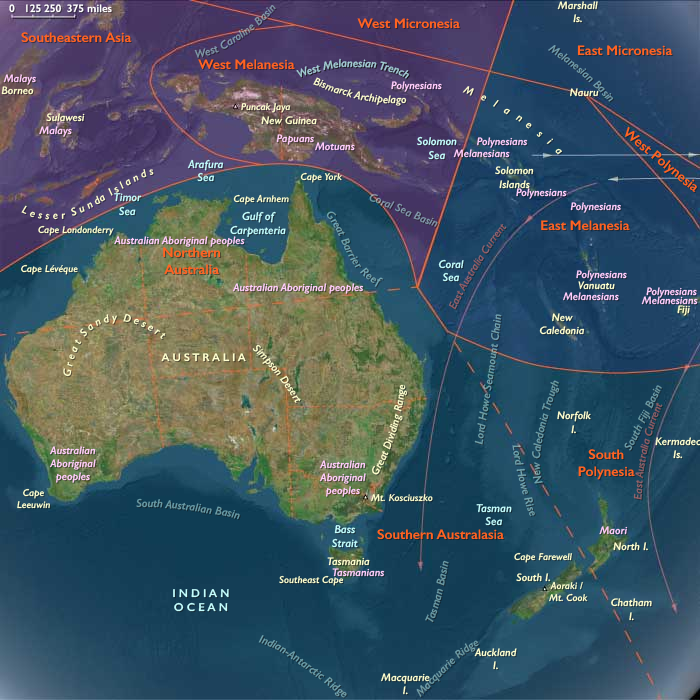
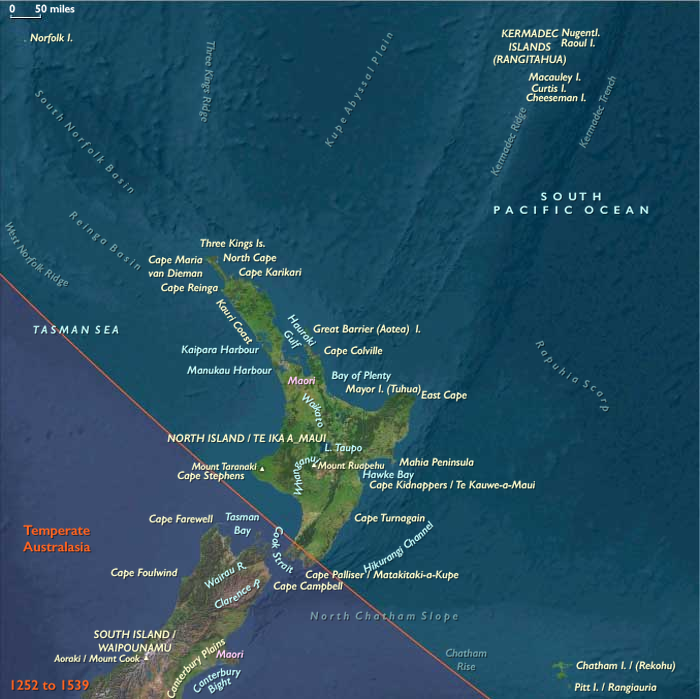
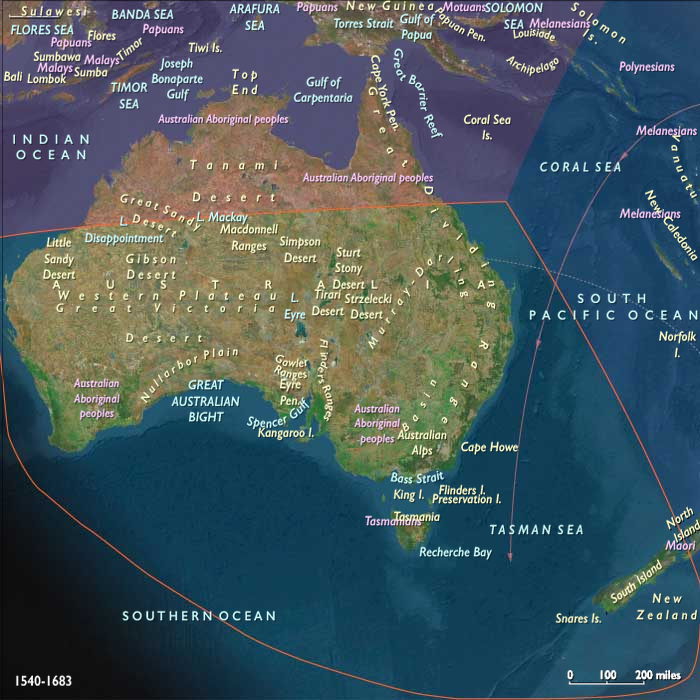
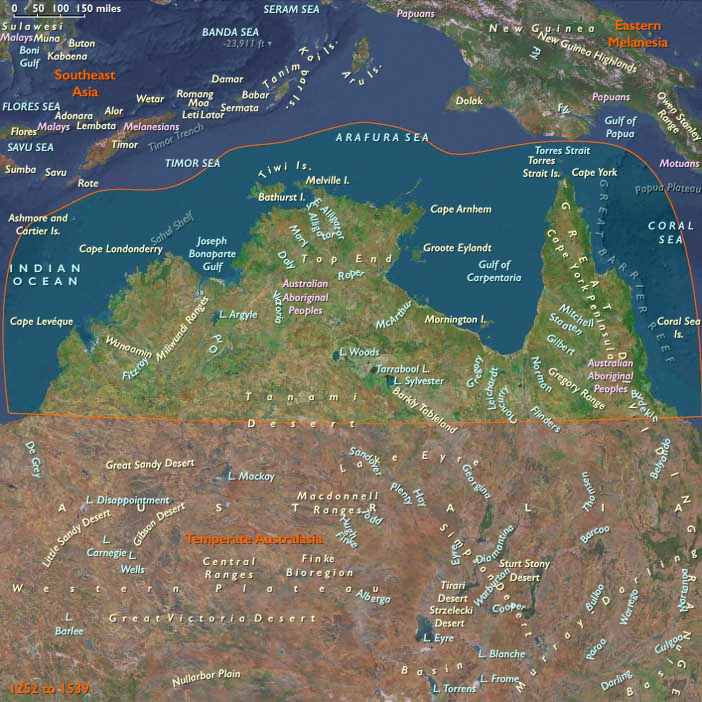
Australasia in this age encompassed three interlinked southern realms: South Polynesia (New Zealand’s North Island, the Chatham, Norfolk, and Kermadec Islands), Southern Australasia (southern Australia, Tasmania, and New Zealand’s temperate South Island), and Northern Australia (the Kimberley, Arnhem Land, Cape York, and the Gulf of Carpentaria).
Across this vast region, landscapes ranged from New Zealand’s volcanic valleys and river plains to Australia’s open woodlands, desert margins, and tropical floodplains. To the south lay the westerly-swept Tasman Sea and the icy waters of the Southern Ocean, connecting temperate islands through seasonal migration and long coasts. Mountains, plains, and reefs framed human worlds defined by gardening, hunting, burning, and voyaging.
Climate & Environmental Shifts
The early Little Ice Age brought cooler, more variable climates.
-
New Zealand: Shorter growing seasons restricted taro and yam cultivation, prompting adaptation of kumara(sweet potato) to cooler soils.
-
Southern Australia & Tasmania: Cooler, wetter decades alternated with drought, expanding alpine snow cover and reshaping fire regimes.
-
Northern Australia: Monsoons remained dominant but fluctuated in intensity; cyclones periodically reworked coasts and mangroves.
Overall, environmental conditions favored diversification—horticulture in the north and east, fire-managed foraging and hunting in the south and interior.
Subsistence & Settlement
Agricultural and foraging systems reached new levels of ecological refinement.
-
South Polynesia (New Zealand & outliers): Kumara, gourds, and taro gardens expanded in warmer valleys; fortified pā (hilltop villages) clustered around fertile soils and coasts. The Chathams, cooler and wind-swept, depended on fishing, fowling, and seal hunting.
-
Southern Australasia (Australia & Tasmania): Aboriginal fire-stick farming maintained patchwork grasslands, sustaining kangaroo, emu, and wallaby hunting. Fish traps such as Brewarrina and eel channels in Victoria exemplified aquatic engineering. In Tasmania, hunting, gathering, and coastal foraging supported mobile communities.
-
Northern Australia: Seasonal abundance structured life—floodplain fishing and waterfowl harvests in the wet, hunting and yam-gathering in the dry. Coastal peoples exploited reefs and mangroves year-round, maintaining semi-permanent camps at rich estuaries.
Technology & Material Culture
Technological innovation expressed ecological mastery.
-
New Zealand: Stone and greenstone (pounamu) adzes, carved canoes (waka), flax-fiber cloaks, and pāfortifications embodied the emerging Māori cultural complex.
-
Australia: Stone tools, nets, and bark canoes persisted, while fire remained a powerful shaping tool of the landscape. Fish traps, grindstones, and bone tools extended productivity.
-
Northern Australia: Dugout and bark canoes, fish spears, and woven baskets enabled estuarine and reef exploitation. Rock art in Arnhem Land and the Kimberley portrayed ancestral beings, marine life, and ceremony, marking continuity of the Dreaming.
Movement & Interaction Corridors
Mobility linked landscapes and seas.
-
In New Zealand, waka voyaging between North and South Islands sustained kin ties and resource exchange; routes reached out to the Chathams, Norfolk, and Kermadecs.
-
In Australia, trading paths moved ochre, stone, and songlines across vast distances; coastal exchange connected shell ornaments and ritual objects between the Bight and Cape York.
-
Northern Australia interfaced with the wider Indo-Pacific: Torres Strait crossings brought Papuan exchange centuries before Europeans, and possible early contact with Macassan trepangers hinted at future maritime linkages.
Cultural & Symbolic Expressions
Spiritual life united land, sea, and ancestry.
-
Māori traditions articulated kinship through whakapapa (genealogy) and sacred landscapes marked by marae(ceremonial courtyards) and carved meeting houses. Agricultural rites and warfare fused political power with fertility and remembrance.
-
Aboriginal Australians followed the Dreaming (Songlines)—ancestral pathways mapping creation and law across country. Ceremonial dances, fire rituals, and totemic obligations reaffirmed balance between people and place.
-
Northern traditions joined cosmology and ecology: bark painting, rock art, and initiation ceremonies tied communities to seasonal renewal, the monsoon cycle, and the ancestors’ realm.
Environmental Adaptation & Resilience
Australasian societies displayed extraordinary ecological intelligence.
-
Horticultural innovation: Kumara adapted to cool New Zealand soils; dryland cultivation persisted on Norfolkand Kermadecs.
-
Fire management: Aboriginal burning regenerated grasslands, reduced catastrophic fires, and ensured hunting continuity.
-
Mobility and exchange: Seasonal movement and kin redistribution buffered scarcity, while ritual feasting maintained social cohesion.
-
Resource integration: Marine, forest, and agricultural zones were managed as single systems—spatially diverse yet socially cohesive.
Transition (to 1539 CE)
By 1539, Australasia formed a mosaic of interconnected but autonomous traditions: Māori horticultural chiefdoms rising in temperate islands; Aboriginal fire-managed ecologies sustaining the world’s oldest living cultures; and monsoonal hunter-fishers thriving in the continent’s north.
Across seas, estuaries, and mountains, people lived by renewal—of fire, crop, and ceremony. The region stood complete in its balance between abundance and restraint, its societies resilient under cooler skies and shifting rains. The southern-ocean world was fully peopled, richly symbolic, and ecologically integrated—unaware that distant sails, already rounding the Cape of Good Hope, would soon redraw its horizons.
Groups
Commodoties
Subjects
Regions
Subregions
Related Events
Showing 10 events out of 43406 total
Years: 1396 - 1539
Groups
Commodoties
Subjects
Regions
Subregions