
Western Southeast Europe (1396–1539 CE): Frontiers of …
Years: 1396 - 1539
Western Southeast Europe (1396–1539 CE): Frontiers of Empire, Sea Lanes, and Mountain Worlds
Geographic & Environmental Context
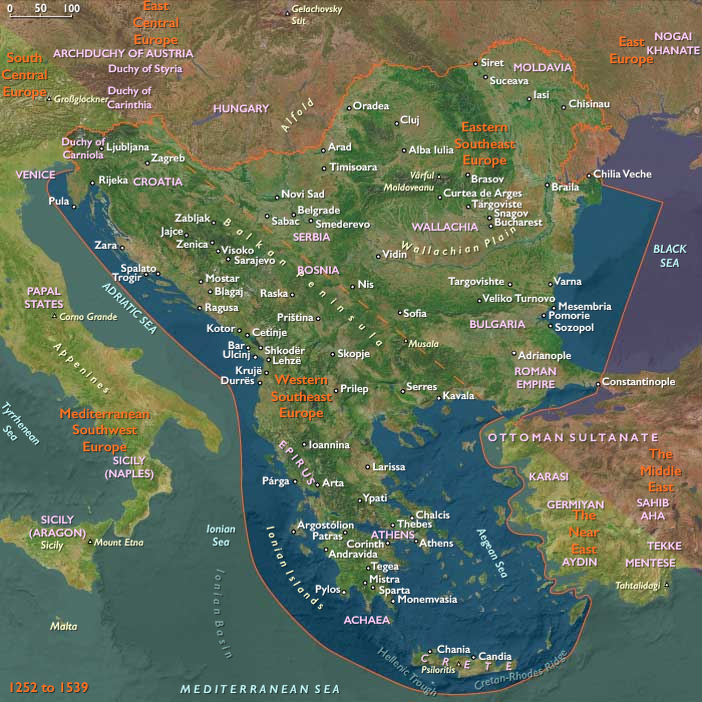
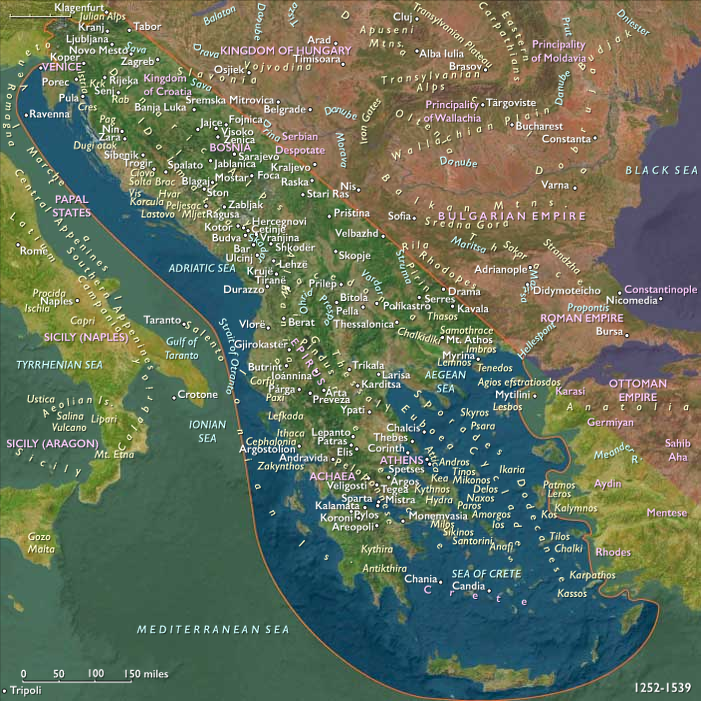
The subregion of Western Southeast Europe includes Greece, Albania, Montenegro, North Macedonia, Kosovo, most of Bosnia, southwestern Serbia, most of Croatia, and Slovenia—facing the Adriatic and Aegean but not the Black Sea. Anchors included the Via Egnatia corridor, the Dalmatian coast and islands, and mountain ranges from the Dinaric Alps to the Pindus.
Climate & Environmental Shifts
The onset of the Little Ice Age meant cooler winters, late frosts, and alternating droughts and floods. Snow persisted longer in uplands. Stormier Adriatic seasons complicated navigation. Earthquakes occasionally damaged towns and fortifications.
Subsistence & Settlement
-
Coasts and islands: Olives, vines, figs, and fisheries; salt pans at Ston and Pag. Maritime towns exported wine, oil, timber, and fish.
-
Plains and valleys: Wheat, barley, millet, and rice in irrigated lowlands. Market towns along rivers tied hinterland to coast.
-
Uplands: Transhumant herding of sheep and goats; forest exploitation for timber and resins.
-
Mining zones: Bosnian silver and lead supported mints and exports via Dubrovnik.
Technology & Material Culture
Gunpowder artillery transformed warfare, prompting thicker walls and angular bastions. Coastal shipyards produced galleys and coasters. Inland, watermills and mining technologies multiplied. Venetian Gothic façades and Orthodox monasteries testified to a plural cultural landscape. Fresco painting and manuscript copying remained vibrant, while Ottoman vakıf foundations introduced new architectural forms.
Movement & Interaction Corridors
-
Adriatic and Aegean sea lanes: Carried Venetian and Ottoman fleets, merchants, and pilgrims.
-
Via Egnatia: Linked Durrës to Thessaloniki, with spurs into the Balkans.
-
River valleys and mountain passes: Connected mining interiors with ports like Dubrovnik.
Cultural & Symbolic Expressions
Three traditions intertwined:
-
Orthodoxy: Monastic centers (Athos, Meteora) sustained learning and art.
-
Catholicism: Dalmatian cities cultivated confraternities, schools, and Gothic churches.
-
Islam: Ottoman conquests introduced mosques, baths, and caravanserais.
Oral epics, Albanian heroic songs, South Slavic ballads, and Greek demotic verse flourished. Potlatch-like feasting rituals reinforced honor economies across tribal and village societies.
Environmental Adaptation & Resilience
Terracing, cisterns, and mixed farming stabilized fragile slopes. Salt, dried fish, and granaries buffered food shortages. Forest statutes managed timber for ships and mines. Transhumant calendars synchronized upland and lowland resources.
Transition
Between 1396 and 1539, the Ottoman Empire consolidated control over much of the Balkans (Bosnia 1463, Serbia 1459, Greece through the 15th century). Venice retained coastal enclaves but ceded fortresses after wars. Dubrovnik balanced neutrality and trade, prospering as a broker between empires. The age closed with the Battle of Preveza (1538) off Epirus, confirming Ottoman naval dominance in the Ionian and Aegean seas.
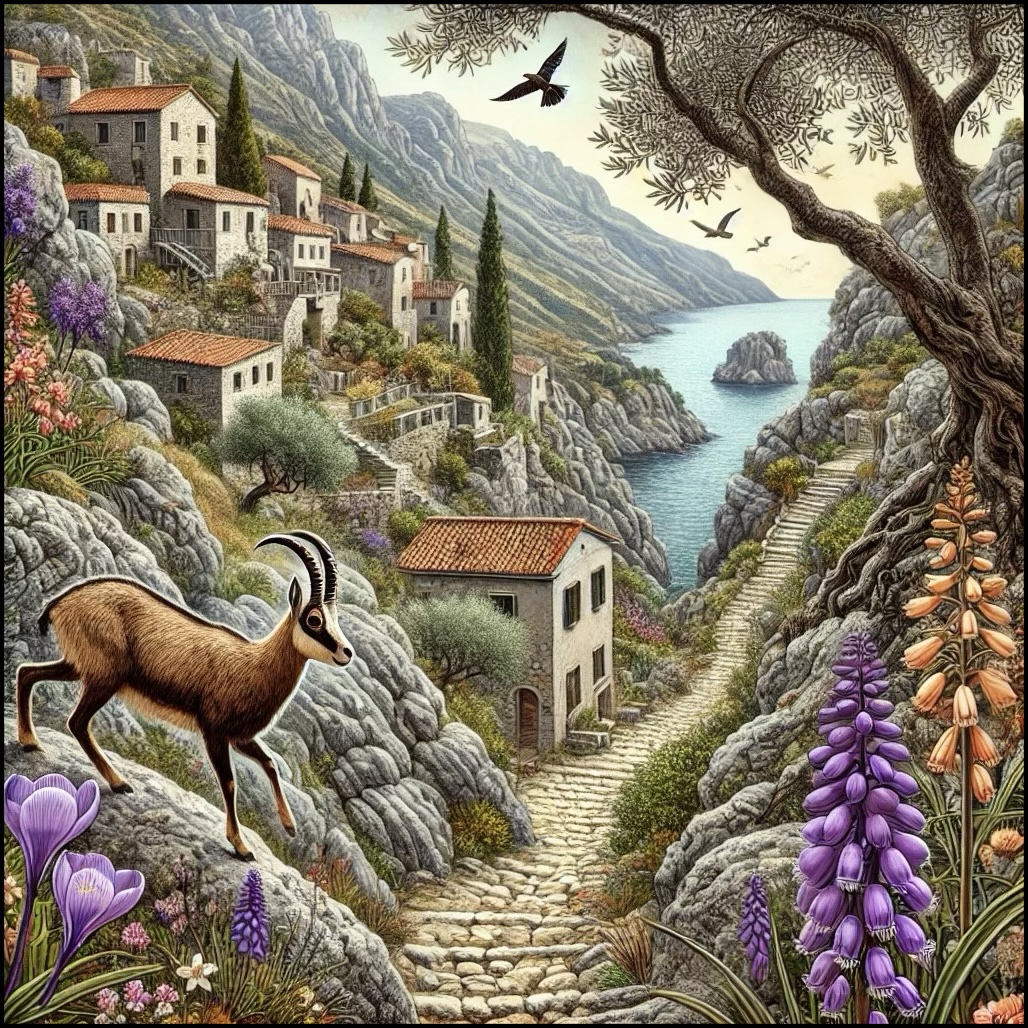
Western Southeast Europe (with civilization) ©2024-25 Electric Prism, Inc. All rights reserved.
Groups
- Slavs, South
- Greeks, Medieval (Byzantines)
- Venice, Duchy of
- Croats (South Slavs)
- Serbs (South Slavs)
- Croatia, Kingdom of
- March of Carniola
- Habsburg, House of
- Christians, Eastern Orthodox
- Christians, Roman Catholic
- Dalmatia region
- Croatia, Kingdom of
- Austria, Archduchy of
- Styria, Duchy of
- Athens, Duchy of
- Epirus, Despotate of
- Serbia, Kingdom of
- Hungary, Kingdom of
- Achaea, Principality of
- Achaea, Principality of
- Ottoman Emirate
- Catalan Company of the East, Grand (officially the Company of the Army of the Franks in Romania, sometimes called the Grand Company and widely known as the Catalan Company
- Ottoman Emirate
- Serbian Empire
- Ottoman Empire
- Epirus, Despotate of
- Ragusa, Republic of
- Carniola, Duchy of
- Humska zemlja (Hum)
Topics
- Little Ice Age, Warm Phase I
- Little Ice Age (LIA)
- Black Death, or Great Plague
- Serbian Empire, fall of the
- Kosovo, Battle of
Commodoties
- Glass
- Domestic animals
- Oils, gums, resins, and waxes
- Grains and produce
- Textiles
- Ceramics
- Strategic metals
- Salt
- Beer, wine, and spirits
- Manufactured goods
- Money
- Aroma compounds
Subjects
Regions
Subregions
Related Events
Showing 10 events out of 43406 total
Years: 1396 - 1539
Western Southeast Europe (with civilization) ©2024-25 Electric Prism, Inc. All rights reserved.
Groups
- Slavs, South
- Greeks, Medieval (Byzantines)
- Venice, Duchy of
- Croats (South Slavs)
- Serbs (South Slavs)
- Croatia, Kingdom of
- March of Carniola
- Habsburg, House of
- Christians, Eastern Orthodox
- Christians, Roman Catholic
- Dalmatia region
- Croatia, Kingdom of
- Austria, Archduchy of
- Styria, Duchy of
- Athens, Duchy of
- Epirus, Despotate of
- Serbia, Kingdom of
- Hungary, Kingdom of
- Achaea, Principality of
- Achaea, Principality of
- Ottoman Emirate
- Catalan Company of the East, Grand (officially the Company of the Army of the Franks in Romania, sometimes called the Grand Company and widely known as the Catalan Company
- Ottoman Emirate
- Serbian Empire
- Ottoman Empire
- Epirus, Despotate of
- Ragusa, Republic of
- Carniola, Duchy of
- Humska zemlja (Hum)
Topics
- Little Ice Age, Warm Phase I
- Little Ice Age (LIA)
- Black Death, or Great Plague
- Serbian Empire, fall of the
- Kosovo, Battle of
Commodoties
- Glass
- Domestic animals
- Oils, gums, resins, and waxes
- Grains and produce
- Textiles
- Ceramics
- Strategic metals
- Salt
- Beer, wine, and spirits
- Manufactured goods
- Money
- Aroma compounds
Subjects
Regions
Subregions